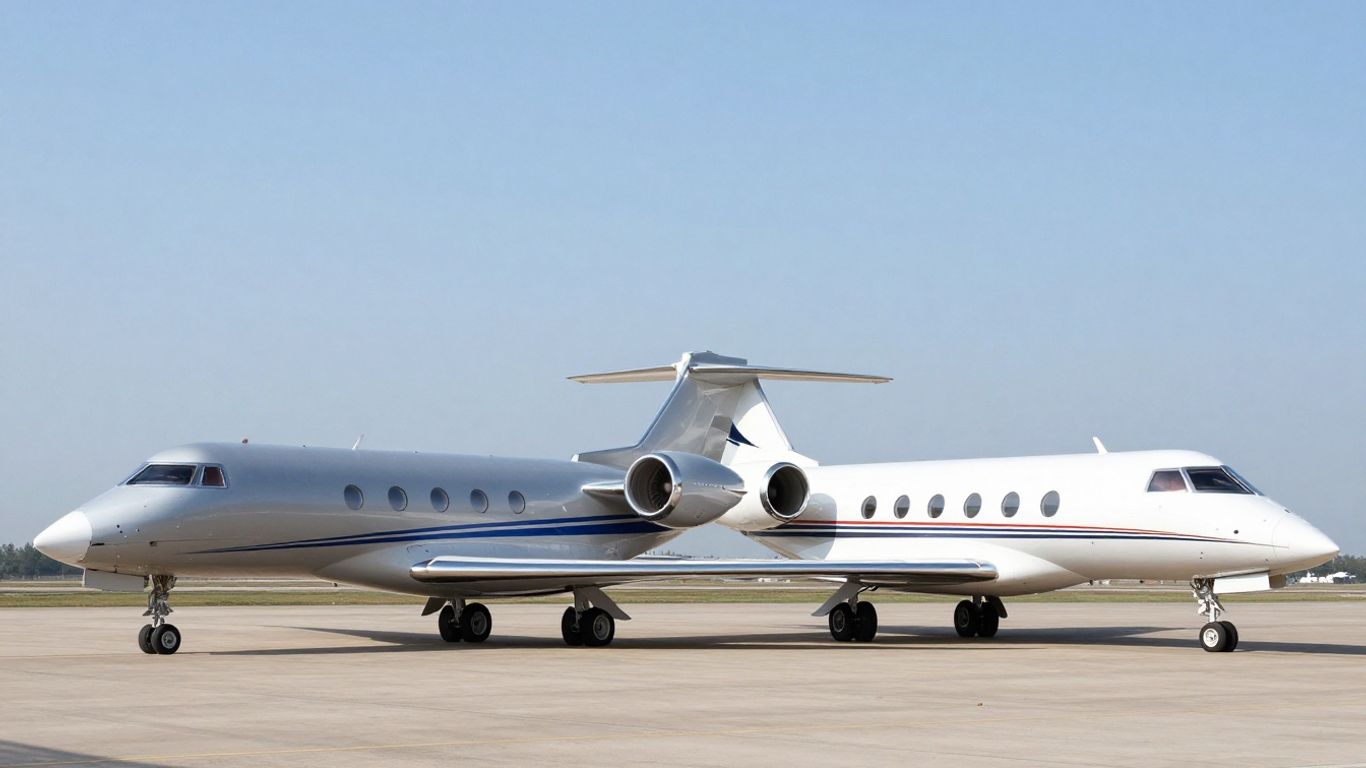
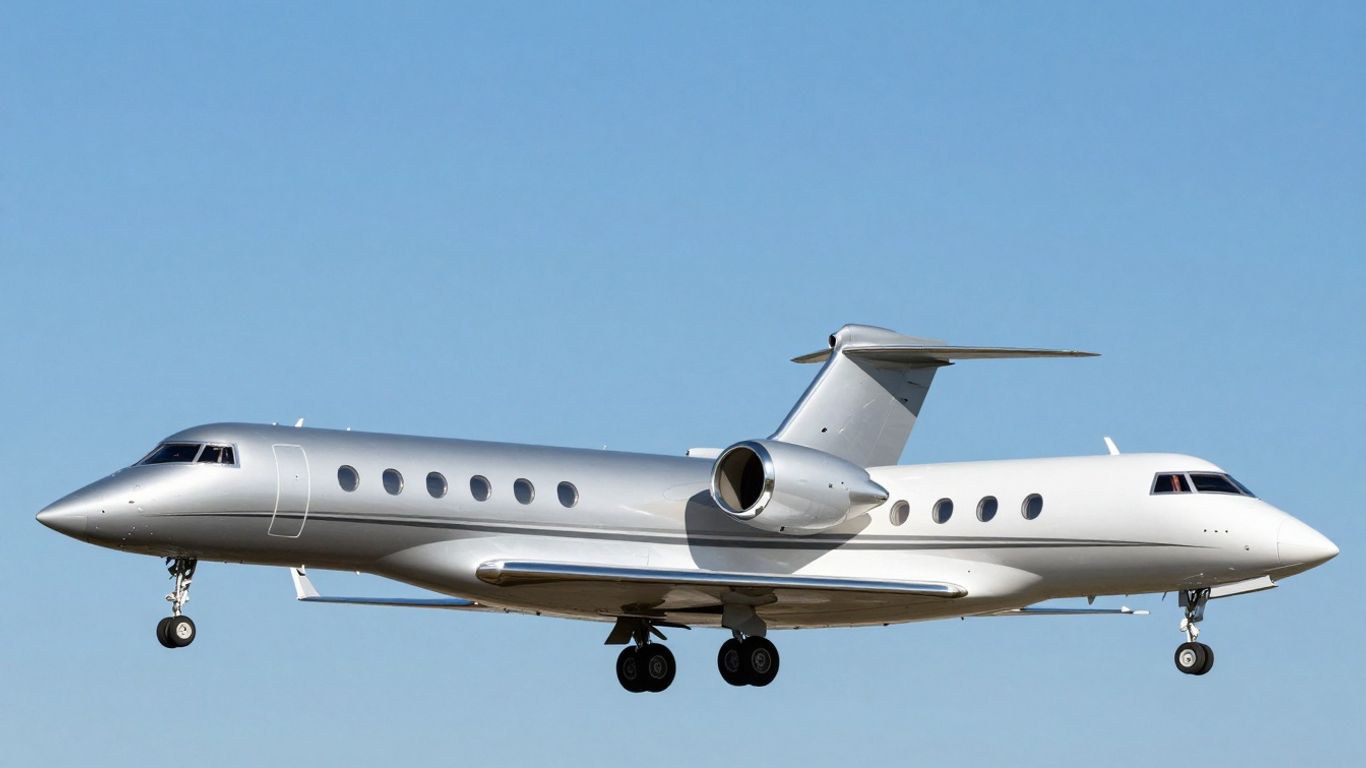
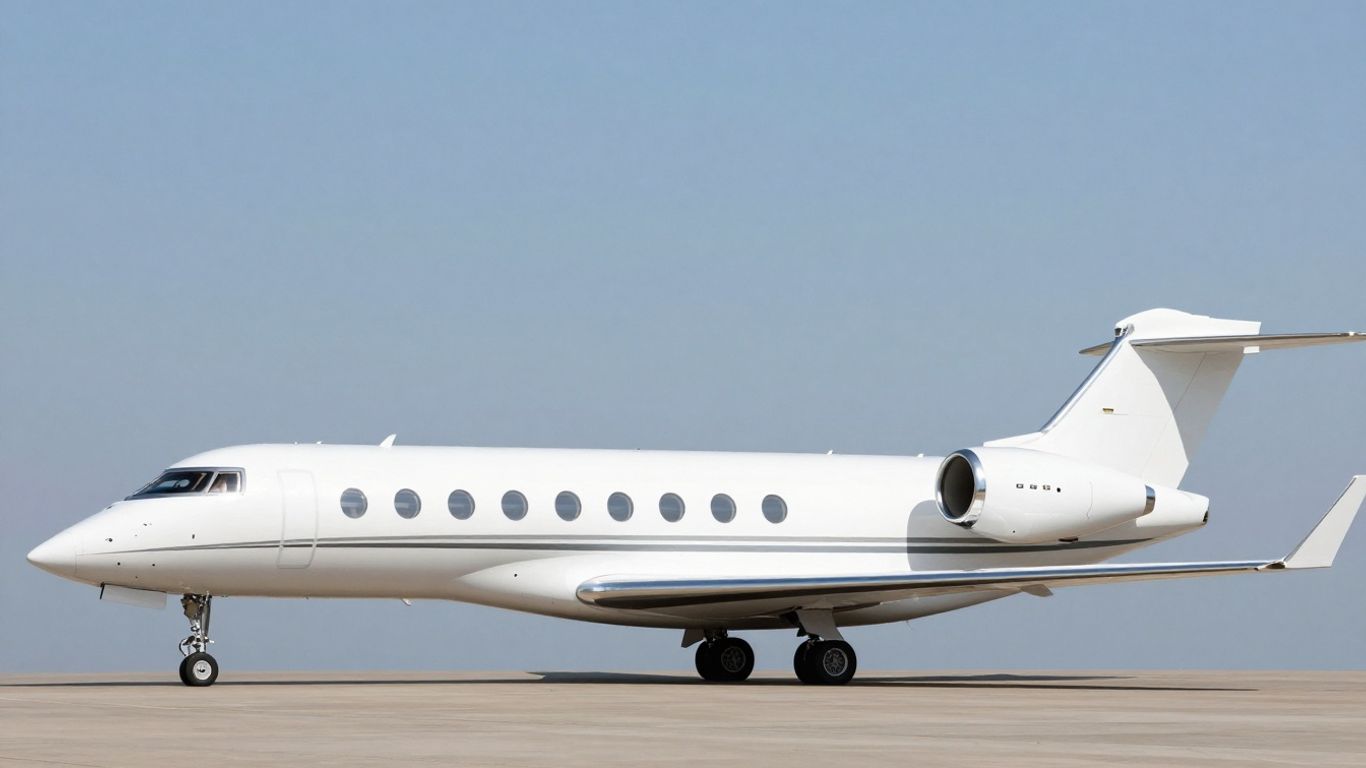
When you’re looking at the top-tier private jets, the Gulfstream G650 and the Bombardier Global 7500 are pretty much the kings of the sky. These planes aren’t just about getting from point A to point B; they’re about doing it with a ridiculous amount of comfort and style. We’re talking about jets that can cross oceans without stopping, carrying you and your guests in luxury. So, what’s the real difference between the Gulfstream G650 vs Global 7500? Let’s break down what makes each one special and help you figure out which one might be the better fit for your travels.
Key Takeaways
The Global 7500 generally offers a bit more range, letting you fly slightly farther nonstop compared to the Gulfstream G650.
When it comes to cabin space, the Global 7500 tends to be larger, often featuring more distinct areas for work, relaxation, or dining.
Both jets are incredibly fast, cruising at similar high speeds that significantly cut down travel time on long trips.
The Global 7500 often has an edge in takeoff and landing performance, especially at challenging airports, giving it more operational flexibility.
While both provide a luxurious experience, the Global 7500 introduces specific amenities like advanced lighting to combat jet lag and a more capable galley, setting it apart in cabin comfort.
Unrivaled Range Capabilities
Gulfstream G650’s Extended Reach
The Gulfstream G650, and its ER (Extended Range) variant, has long been a benchmark for private jet travel, especially when it comes to covering vast distances. It offers a remarkable range, typically around 7,000 nautical miles for the standard G650 and up to 7,500 nautical miles for the G650ER. This capability means that many intercontinental routes, like flying from Johannesburg to London or Dubai to Los Angeles, are achievable without a stop. It’s a jet that truly opens up the globe for its passengers, making long-haul travel feel significantly more accessible and less time-consuming. The G650ER, in particular, cemented its reputation by enabling flights that were previously only possible with commercial airliners, but with the added benefit of privacy and bespoke scheduling.
Global 7500’s Superior Distance
Bombardier’s Global 7500 steps into the arena with an even more impressive range, pushing the boundaries to approximately 7,700 nautical miles. This slight, yet significant, increase in range allows for even more ambitious city pairings. Think non-stop journeys from New York to Hong Kong, or Singapore to San Francisco. The Global 7500 is designed for those who need to connect the furthest corners of the world with maximum efficiency. Its extended reach means fewer compromises on flight planning and more direct routes, which translates to less time in the air and more time at your destination. It’s a testament to modern aerospace engineering, pushing what’s possible in private aviation.
Impact on Global Connectivity
Both the G650ER and the Global 7500 fundamentally change how individuals and businesses approach global travel. They shrink the world, making distant markets and remote locations accessible within a single day’s travel. This isn’t just about convenience; it’s about opportunity. Businesses can operate more effectively across continents, and individuals can pursue leisure or personal matters without the usual constraints of long-haul flights. The ability to fly these distances means that the traditional hubs and spokes model of air travel becomes less relevant for those who can afford these aircraft. It fosters a more connected world, where geographical distance is less of a barrier.
Here’s a quick look at their typical maximum ranges:
Aircraft Model
Maximum Range (Nautical Miles)
Gulfstream G650ER
7,500
Bombardier Global 7500
7,700
The extended range capabilities of these aircraft mean that the concept of ‘too far’ is rapidly becoming obsolete in the world of private aviation. They are tools that enable truly global operations and personal reach.
Cabin Dimensions and Layout
When you’re looking at jets like the G650 and the Global 7500, the inside space is a huge part of what makes them special. It’s not just about getting from point A to point B; it’s about how you experience the journey.
Comparing Interior Volume
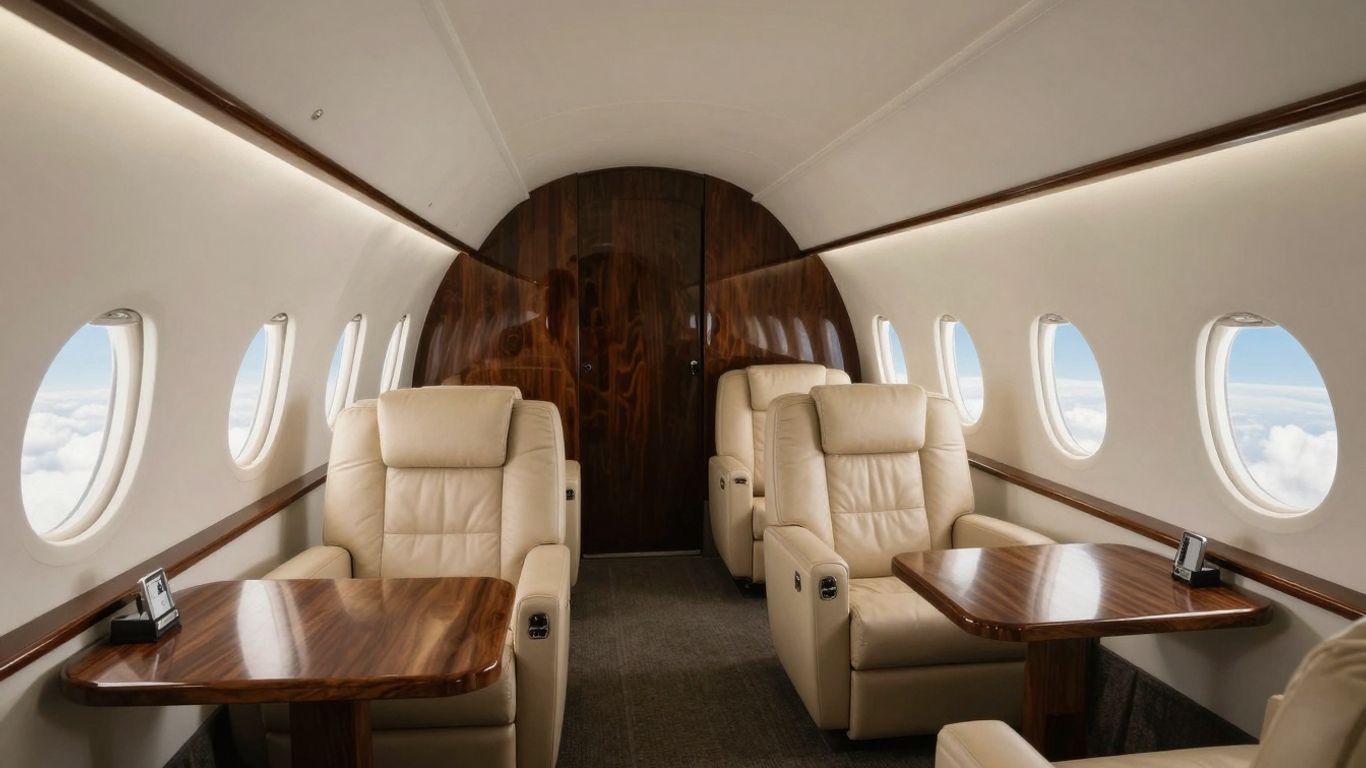
These aren’t your average planes; they’re built with a lot of room to move around. Think of it like having a spacious apartment in the sky. The cabin length can stretch over 40 feet, and some even go up to 50 feet or more, depending on the exact setup. The width is usually around 8 feet, giving you plenty of space side-to-side, and the height is typically over 6 feet, so most people can stand up straight without ducking. This extra space means you can actually walk around, stretch your legs, and not feel cooped up, which is a big deal on longer flights.
Aircraft Model
Cabin Length (ft)
Cabin Width (ft)
Cabin Height (ft)
Cabin Volume (cu ft)
Gulfstream G650/ER
~46.8
~8.2
~6.25
~2,138
Bombardier Global 7500
~56.8
~8.2
~6.25
~2,603
Distinct Living Zones
What’s really neat is how these large cabins are divided up. They’re not just one big open room. Instead, you can have different areas for different things. You might have a section up front for meetings or working, with tables and comfortable seating where people can face each other. Then, there could be a more relaxed area in the middle, maybe with plush seats for watching movies or just chatting. And often, way in the back, there’s a private suite. This setup means everyone can do what they need or want to do without bothering others.
Work and Meeting Area: Often features conference tables and connectivity for presentations.
Relaxation Zone: Comfortable seating arrangements for downtime and entertainment.
Private Stateroom: A dedicated quiet space, sometimes with a bed, for rest.
Passenger Capacity and Comfort
While these jets can technically carry a good number of people, usually up to 19, the real luxury is in how they’re configured for comfort. Most operators choose layouts that prioritize space and amenities for fewer passengers, often around 16. This allows for those distinct zones we talked about and makes sure everyone has enough room. The seats themselves are usually top-notch, often made of fine leather, and designed to recline or even convert into beds for overnight flights. It’s all about making the journey as comfortable as possible, so you arrive feeling refreshed, not worn out.
The ability to move freely within a spacious cabin, coupled with the flexibility to create distinct zones for work, dining, and rest, transforms long-haul private jet travel from a necessity into a truly enjoyable experience.
Performance Metrics: Speed and Efficiency
When we talk about ultra-long-range business jets like the Gulfstream G650 and the Bombardier Global 7500, speed and how efficiently they use fuel are pretty big deals. It’s not just about getting from point A to point B, but how quickly and economically you can do it.
Cruising Speed Comparisons
Both the G650 and the Global 7500 are incredibly fast aircraft, designed to cut down travel time on those long hauls. The G650 and its ER variant can hit a top cruise speed of Mach 0.925, which is about 611 knots. The Global 7500 is right there with it, capable of Mach 0.925 as well, clocking in at around 612 knots. For a bit more pep, the newer Gulfstream G700 nudges ahead slightly to Mach 0.935. What does this mean in real terms? It means you’re shaving hours off intercontinental journeys. Think of it as the difference between a brisk jog and a full sprint – both get you there, but one is significantly faster.
Fuel Efficiency Considerations
Now, speed comes at a cost, and that’s fuel. These jets are workhorses, and they do burn a good amount of fuel. However, the comparison isn’t always straightforward. While absolute fuel burn might be higher than smaller jets, when you look at it on a per-passenger or per-mile basis for the missions they’re designed for, they can be quite efficient. The GE Passport engines on the Global 7500 are known for their efficiency, and newer engine tech, like the Rolls-Royce Pearl 700 on the G700, aims to improve this further. It’s a balancing act between getting there fast and managing the operational costs.
Optimizing for Mission Profiles
Choosing between these jets often comes down to what kind of trips you’ll be taking most often. Are you frequently flying ultra-long routes where every minute saved is critical? Or are you doing a mix of shorter hops and longer journeys? The G650ER, for instance, offers a fantastic balance for maximum range with minimal compromise. The Global 7500, with its impressive range and speed, is built for those extreme point-to-point missions. Understanding your typical flight paths and durations helps determine which aircraft’s performance characteristics best fit your needs. It’s about matching the machine to the mission, not just picking the fastest or the one with the longest legs.
The performance figures for these aircraft are not just numbers on a spec sheet; they translate directly into tangible benefits for passengers. Reduced flight times mean less time spent in the air, which can significantly impact passenger fatigue and productivity. Furthermore, the efficiency of the engines, while consuming substantial fuel, is optimized for the specific demands of ultra-long-range flight, making these journeys more viable and cost-effective on a per-trip basis than might be initially assumed.
Advanced Cabin Amenities
When you’re spending hours in the sky, the little things really make a difference, right? Both the G650 and the Global 7500 really lean into making the cabin feel less like a plane and more like a luxury lounge or even a home away from home. They’ve packed in some pretty neat features to keep everyone comfortable and happy.
Innovative Seating Solutions
Forget stiff, cramped seats. These jets offer seating that’s designed for long-haul comfort. Think plush, ergonomic seats that can swivel, recline fully, and even convert into beds. The G650, for instance, often features seats that feel more like armchairs, upholstered in fine leather, perfect for relaxing or getting some sleep. The Global 7500 takes this a step further with its flexibility, allowing for various configurations. You might find club seating arrangements ideal for meetings, or divans that are great for lounging. The ability to customize the seating arrangement to suit the mission, whether it’s for work or rest, is a major plus.
Atmospheric and Lighting Systems
It’s not just about the seats; it’s about the whole environment. Both aircraft pay close attention to cabin air quality, maintaining lower cabin altitudes than older jets. This means less fatigue and a more comfortable experience, especially on those intercontinental flights. The lighting systems are pretty sophisticated too. You’ll find dynamic lighting that can be adjusted to mimic natural daylight cycles, helping passengers adjust to time zone changes. It can shift from bright and energizing for daytime work to soft and calming for evening relaxation. It really helps set the mood.
Culinary and Galley Features
These aren’t your typical airline galleys. We’re talking about full-service kitchens up in the sky. Both the G650 and the Global 7500 are equipped with advanced galley facilities. You can expect convection ovens, microwaves, high-speed chillers, and plenty of space for catering. This means you can have gourmet meals prepared onboard, just like you would in a top restaurant. The G650’s galley is known for its efficiency, while the Global 7500 often boasts a larger, more expansive galley area, sometimes even featuring a full-size oven. It’s all about providing a premium dining experience, no matter where you’re headed.
The focus on advanced amenities goes beyond mere convenience; it’s about creating an environment that supports passenger well-being and productivity throughout the flight. From personalized climate control to sophisticated entertainment options, every detail is considered to ensure a superior travel experience.
Operational Flexibility
When you’re looking at top-tier private jets like the Gulfstream G650 and the Bombardier Global 7500, how they handle different airports and conditions really matters. It’s not just about how far they can go, but where they can actually take you.
Takeoff and Landing Performance
Both the G650 and the Global 7500 are designed to operate from a wide variety of airports, but there are subtle differences. The Global 7500, with its advanced wing design, can sometimes achieve slightly shorter takeoff and landing distances, especially under certain weight and temperature conditions. This means it might be able to use airports that are a bit more constrained. The G650, however, is no slouch and is renowned for its robust performance across many airfield types.
Here’s a quick look at typical runway requirements:
Note: These figures are approximate and can vary based on specific operating conditions, weight, and aircraft configuration.
High-Altitude Airport Operations
Flying into airports at higher elevations presents unique challenges due to thinner air, which affects engine performance and lift. Both jets are built to handle these conditions well, but their powerful engines and aerodynamic designs give them an edge. The ability to operate efficiently from places like Aspen or La Paz, where many smaller jets struggle, is a significant advantage for business and leisure travel.
Runway Requirements
Beyond just length, runway width, surface condition, and approach procedures play a role. Both aircraft are certified for operations on standard runways, but their respective designs offer different levels of confidence. The Global 7500’s design, for instance, is often highlighted for its ability to maintain performance even when faced with less-than-ideal runway surfaces or challenging approach angles. This flexibility opens up more destination options, reducing the need for ground transportation from larger, more distant airports.
The true measure of operational flexibility lies in an aircraft’s ability to access a wider range of destinations reliably and safely. This capability directly translates into more direct travel options and greater convenience for passengers, minimizing the need for connecting flights or lengthy ground transfers.
Design Philosophy and Passenger Experience
Cabin Altitude and Air Quality
Both the Gulfstream G650 and the Bombardier Global 7500 are engineered with passenger well-being at the forefront, particularly concerning the cabin environment. They achieve remarkably low cabin altitudes, often around 4,000 to 5,000 feet, even when the aircraft is flying at its highest cruising altitudes. This significantly reduces the effects of altitude on the body, helping passengers feel more rested and less fatigued upon arrival. Think of it like stepping out of a mountain lodge instead of a high-altitude summit. The air filtration systems are also top-notch, using advanced HEPA filters to remove dust, allergens, and other particulates, providing a clean and fresh atmosphere throughout the flight. This focus on air quality is a key part of the design philosophy, aiming to make long journeys feel shorter and more comfortable.
Noise Suppression and Serenity
When you step inside these aircraft, the first thing you might notice is the quiet. Both manufacturers have put a lot of effort into making the cabins as peaceful as possible. They use advanced soundproofing materials and aerodynamic designs to minimize engine noise and airflow sounds. This creates a serene environment where you can easily hold a conversation, enjoy your entertainment, or simply relax without the usual drone of air travel. It’s a noticeable difference from smaller jets, allowing for a truly tranquil experience.
Mitigating Jet Lag
Designing for passenger experience goes beyond just comfort; it’s about arriving at your destination feeling ready to go. The combination of low cabin altitude, excellent air quality, and a quiet cabin environment directly combats the common symptoms of jet lag. By reducing physiological stress during the flight, these aircraft help passengers maintain a more natural sleep-wake cycle. The ability to have private sleeping quarters, as found in many configurations of these jets, further aids in arriving refreshed. The goal is to make the journey itself a restorative part of your travel, not a drain on your energy.
Here’s a quick look at how they stack up:
Feature
Gulfstream G650 (Typical)
Bombardier Global 7500 (Typical)
Cabin Altitude (ft)
~4,850
~4,850
Air Filtration
HEPA
HEPA
Noise Level
Very Low
Very Low
Private Stateroom Option
Yes
Yes
Market Positioning and Value
Competitive Landscape
When you’re looking at the top tier of private jets, it’s a bit like a high-stakes chess match. Both the Gulfstream G650 and the Bombardier Global 7500 are powerhouses, but they’ve carved out slightly different niches. The G650, especially the ER version, has long been the go-to for sheer range, making it a favorite for those needing to cross continents without a stop. It’s got a solid reputation and a strong presence in the market. On the other hand, the Global 7500 came in with a bang, boasting a larger cabin and impressive range that really challenged the status quo. It’s often seen as the newer, perhaps more modern, contender, especially with its advanced cabin features and layout.
It’s not just these two, though. You’ve also got players like the Dassault Falcon 8X, which offers a different kind of value, often with a more budget-friendly price tag and tri-engine reliability. The market is dynamic, with new models and upgrades constantly shifting the balance. The choice often comes down to prioritizing specific needs: absolute maximum range, cabin size and configuration, or perhaps a balance of performance and operating cost.
Ownership and Charter Considerations
Thinking about owning one of these jets is a big decision, and it’s not just about the sticker price. For the G650, you’re looking at a well-established aircraft with a known resale value, typically holding around 70% of its value after five years. This stability is attractive for many buyers. The Global 7500, being newer, has a growing used market, and its competitive pricing against newer Gulfstream models like the G700 makes it a compelling option. When considering charter, the Global 7500’s larger cabin and more flexible living zones can be a big draw for groups needing more space and distinct areas for work or relaxation.
Here’s a quick look at how they stack up in terms of acquisition:
Aircraft Model
Typical New Price (USD)
Typical Used Price (USD)
Key Differentiator
Gulfstream G650
N/A (Discontinued)
$40M – $50M
Proven range, established market presence
Gulfstream G650ER
N/A (Discontinued)
$30M – $58M
Extended range, high demand
Bombardier Global 7500
~$73M
$60M – $68M
Larger cabin, advanced amenities, competitive value
Operating costs are also a significant factor. While both are ultra-long-range jets, the hourly operating expenses can differ. For instance, some analyses suggest the Global 7500 might have a slight edge in certain operational efficiencies due to its design, though this can vary greatly based on mission profiles and specific configurations. Chartering offers flexibility, allowing access to these incredible machines without the full commitment of ownership, but availability and pricing can fluctuate based on demand, especially in regions like the Middle East where demand for these types of aircraft has seen a notable surge.
Long-Term Investment Value
When you’re investing millions in an aircraft, you want to know it’s going to hold its value. Historically, Gulfstream aircraft, including the G650 and G650ER, have demonstrated strong residual values. This is partly due to their robust build quality, consistent demand, and the brand’s reputation for reliability and performance. The G650ER, in particular, has seen appreciation due to its extended range capabilities and the fact that production has ceased, making well-maintained examples increasingly sought after.
The Global 7500 is newer to the market, so its long-term value proposition is still being written, but its impressive performance and cabin features position it well. As the used market for the Global 7500 matures, we’re seeing competitive pricing that can make it an attractive acquisition compared to brand-new options.
Factors influencing long-term value include the aircraft’s total flight hours, maintenance history, avionics upgrades, and interior condition. For both models, staying current with all required inspections and keeping detailed maintenance logs is paramount. The market also responds to global economic trends and specific regional demands; for example, increased interest in certain markets can temporarily boost values for available inventory.
Ultimately, both aircraft represent significant investments. The G650/G650ER offers a proven track record of value retention, while the Global 7500 presents a compelling case with its modern design and capabilities, poised to become a strong contender in the long-term value discussion as its presence in the pre-owned market grows.
Technological Innovations
When we talk about the G650 and the Global 7500, it’s not just about how far they can fly or how big the cabin is. Both of these jets are packed with some seriously smart tech that makes flying better, safer, and more comfortable. It’s like comparing two high-end smartphones – they both make calls, but the underlying tech and features can be worlds apart.
Flight Deck Advancements
The cockpits in these planes are where the magic really starts. The Gulfstream G650 features its PlaneView II avionics suite. Think of it as a really advanced navigation and control system. It includes things like synthetic vision, which gives pilots a 3D view of the terrain even when it’s foggy or dark, and enhanced flight vision systems. It’s all about giving the pilots the clearest possible picture of what’s going on outside and around the aircraft.
On the other side, the Bombardier Global 7500 brings its own set of impressive tech. It uses advanced fly-by-wire technology. This means that instead of mechanical cables directly controlling the flight surfaces, electronic signals are used. This can make the controls more precise and responsive, and it also allows for sophisticated flight control laws that can help manage the aircraft more efficiently and safely, especially in challenging conditions. The goal is always to make flying smoother and more secure.
Connectivity and Entertainment
Nobody wants to be disconnected, especially when you’re flying across oceans. Both jets offer top-tier connectivity options, but the Global 7500 often gets the nod for its integrated systems. Passengers can expect high-speed internet that actually works, allowing for video calls, streaming, and staying connected with the office or family. Entertainment systems are also pretty advanced, with high-definition screens and sound systems that make the cabin feel like a private theater.
Structural and Aerodynamic Design
Beneath the sleek exterior, there’s a lot of clever engineering. The airframes are designed for speed and efficiency. For instance, the G650ER’s extended range comes from design tweaks and possibly extra fuel capacity, allowing it to cover those impressive distances. The Global 7500, with its advanced wing design, is optimized to handle a wide range of speeds and altitudes efficiently. This means less drag and better fuel economy, which is a big deal when you’re flying thousands of miles.
The continuous push for innovation in these aircraft means that even older models are benefiting from upgrades and retrofits. The technology isn’t static; it evolves, making these jets not just modes of transport, but sophisticated flying machines that represent the cutting edge of aviation engineering.
Discover the latest advancements shaping our world. From smart homes to cutting-edge travel tech, innovation is everywhere. Want to see how these new ideas can make your next vacation unforgettable? Visit our website to explore the future of travel!
Choosing Your Ultimate Sky Companion
So, when it comes down to picking between the Gulfstream G650 and the Bombardier Global 7500, it’s not really about one being definitively ‘better’ than the other. Both are absolute marvels of aviation engineering, offering incredible range and comfort for those long journeys. The Global 7500 does seem to have a slight edge in sheer cabin space and a few innovative features like its lighting system designed to help with jet lag, plus a bit more range. But the G650 has a solid reputation and is still a top-tier choice. Think about what matters most for your travels – maybe it’s that extra bit of range, the specific cabin layout, or even just the feel of the aircraft. Whichever you choose, you’re stepping into the very best private aviation has to offer, ready to connect the world in style and comfort.
Frequently Asked Questions
Which jet can fly farther on a single trip?
The Bombardier Global 7500 has a slight edge, able to fly about 7,700 nautical miles. The Gulfstream G650 isn’t far behind, with a range of around 7,000 to 7,500 nautical miles. For most flights, this difference might not even matter.
How do the inside spaces of these jets compare?
The Global 7500 offers a bit more room inside, with over 2,900 cubic feet of space compared to the G650’s roughly 2,500 cubic feet. This extra space means the Global 7500 can have four separate areas for relaxing, working, or dining, while the G650 usually has three.
Are these jets fast?
Yes, both jets are very speedy! They can both fly at speeds close to Mach 0.9, which is almost the speed of sound. This means you can get to your destination much quicker, even on really long trips.
Which jet is better for landing and taking off?
The Global 7500 is a bit better at taking off, especially from airports high up in the mountains. It also needs less runway to land, about 440 feet less than the G650, making it more flexible for different airports.
What kind of special features do these jets have for comfort?
The Global 7500 has some cool features like a special seat that reclines deeply and a lighting system that can help you feel less tired after a long flight. It also has a more advanced kitchen where you can cook meals fresh.
Can I fly directly between very distant cities?
Absolutely! Both jets are designed for ultra-long flights. For example, they can fly non-stop from places like New York to Hong Kong, thanks to their incredible range.
Which jet is more expensive?
Both jets cost around $70 million. The Global 7500 might offer a bit more for the price with its longer range and bigger cabin, but the G650 is still a very popular and luxurious choice.
What’s the main difference in how they are designed?
Gulfstream jets are known for their proven performance and luxury, while Bombardier’s Global 7500 focuses on pushing the limits with more cabin space, longer range, and advanced features like special lighting and seating to make long flights more comfortable.