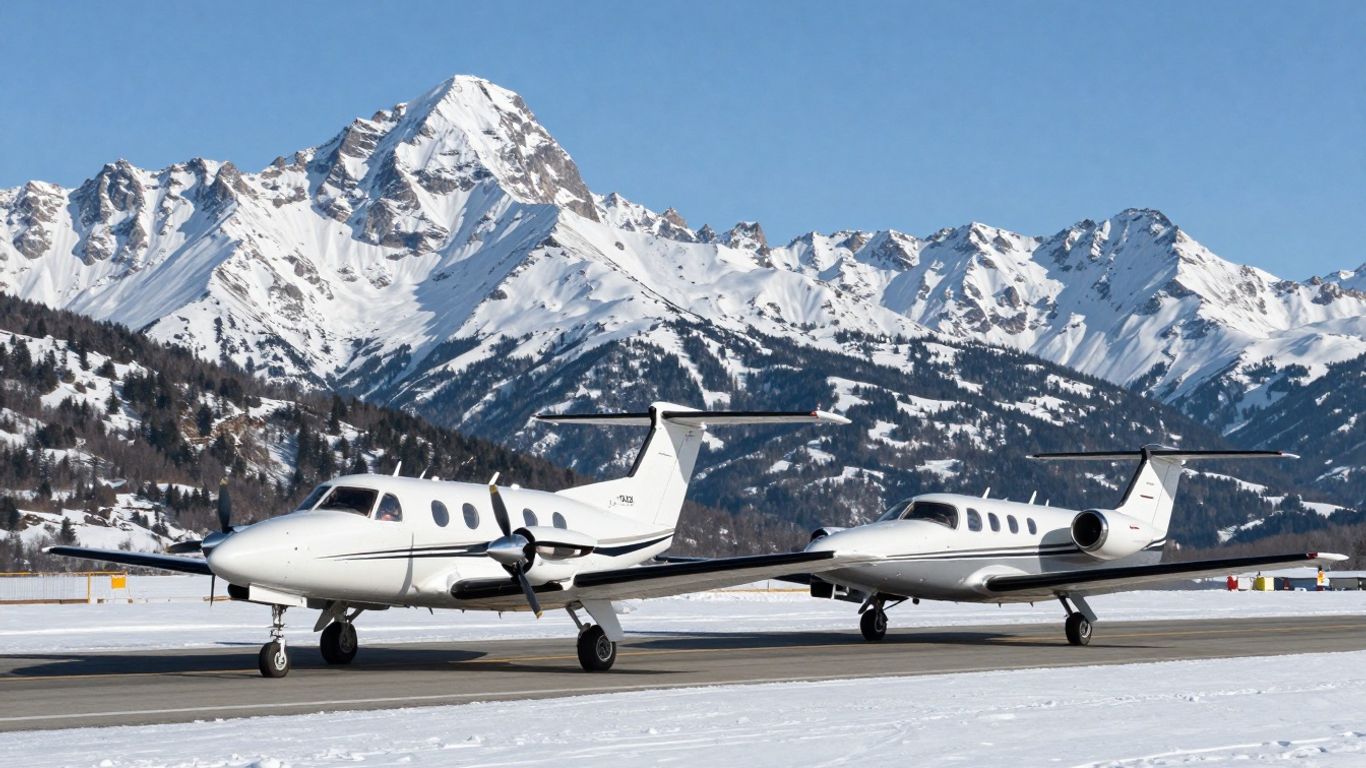
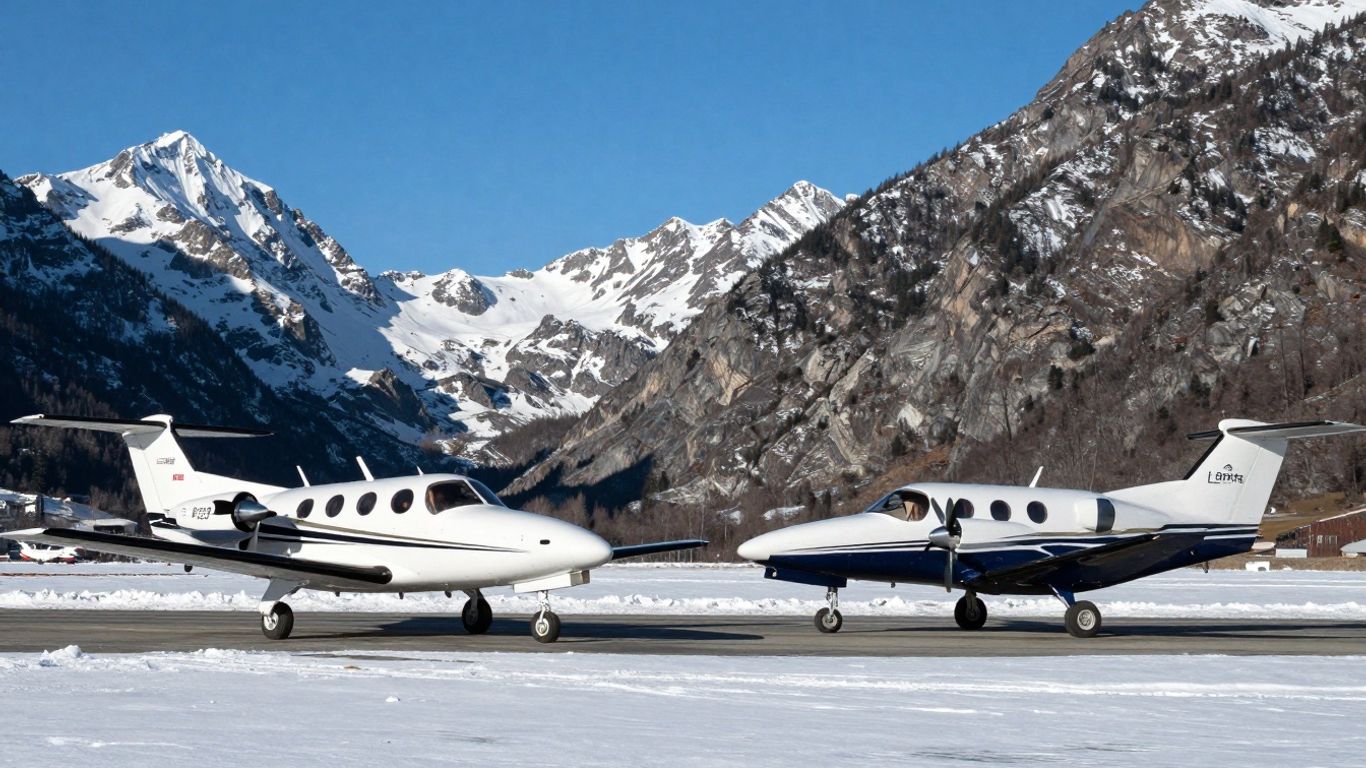
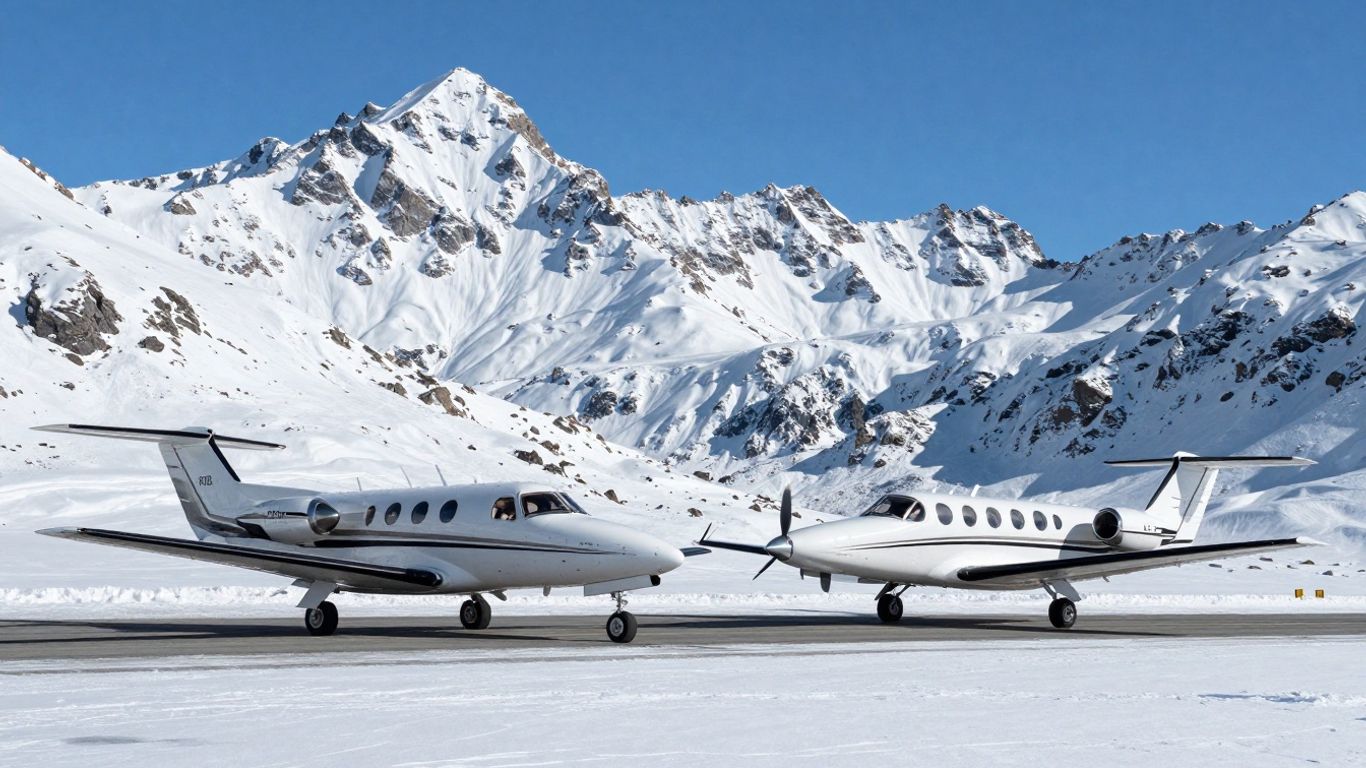
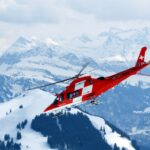
Thinking about heading to a remote mountain spot or a ski lodge with a short runway? You’ve probably heard about the Pilatus PC-12 and the King Air 350i. They’re both popular choices for getting to places that bigger jets just can’t reach. But which one is actually better for those tricky alpine approaches? We’re going to break down the PC-12 vs King Air 350i to help you figure out which aircraft is the right fit for your next adventure. It’s not just about getting there; it’s about how comfortably and efficiently you arrive.
Key Takeaways
The Pilatus PC-12 is a top pick for short and rough runways, often able to land on grass or gravel strips, opening up more remote destinations than most jets.
The King Air 350i, a twin-engine aircraft, offers a different kind of reliability and is a strong contender, though it might need slightly longer runways than the PC-12.
When comparing PC-12 vs King Air 350i for alpine access, consider the PC-12’s unique ability to use very short fields and its large cargo door for bulky gear like skis.
Cabin comfort is a factor, with both aircraft offering good amenities, but the PC-12 often boasts a surprisingly spacious interior for its class, rivaling some jets.
Operational costs and maintenance also play a role; the single-engine PC-12 can sometimes be more economical to run, while the King Air’s twin engines provide an extra layer of redundancy.
Navigating Alpine Terrain: PC-12 vs King Air 350i
When thinking about getting to those hard-to-reach spots in the mountains, especially places with shorter runways, two aircraft often come up: the Pilatus PC-12 and the Beechcraft King Air 350i. Both are really capable turboprops, but they have their own strengths when it comes to accessing alpine areas.
Unveiling the Pilatus PC-12’s Alpine Prowess
The PC-12 is a bit of a legend when it comes to versatility. It’s a single-engine turboprop, which some might see as a limitation, but its design really shines in places where other planes can’t go. Its ability to handle unpaved surfaces and surprisingly short runways is a major draw. Think about landing at a remote ski lodge or a mountain airstrip; the PC-12 is built for that kind of mission. It’s known for its robust construction and the reliability of its Pratt & Whitney PT6A engine, which is a workhorse in aviation. Plus, it has a large cargo door, making it easy to load up all your gear, like skis or golf clubs, without a fuss.
The King Air 350i: A Twin-Engine Contender
The King Air 350i, on the other hand, is a twin-engine turboprop. This setup offers a different kind of confidence for many operators, providing that extra layer of redundancy. It’s a bit faster than the PC-12 and often carries a few more passengers comfortably. The King Air has a long history of dependable service and is well-regarded for its smooth ride and comfortable cabin. While it’s very capable, it generally needs a slightly longer runway than the PC-12, which can be a factor when you’re looking at the absolute shortest alpine strips.
Direct Comparison: Short-Runway Capabilities
When we put them side-by-side for short-runway access, the PC-12 often has the edge. Its design allows it to operate from strips as short as 2,500 feet, including grass and gravel. The King Air 350i, while still very good at short-field operations compared to jets, typically requires a bit more pavement, usually in the range of 3,000-3,500 feet, depending on conditions.
Here’s a quick look at what that means:
Pilatus PC-12: Excels on shorter, unimproved runways. Great for accessing very remote locations directly.
King Air 350i: Very capable on paved short-field runways, offering twin-engine reliability. Might need slightly longer strips than the PC-12.
The choice between these two often comes down to the specific airports you plan to use. If your destination has a very short, possibly unpaved runway, the PC-12 is likely your go-to. If the airports are paved but still on the shorter side, and you value twin-engine redundancy, the King Air 350i is a strong contender.
Performance Metrics for Mountain Access
When you’re heading to the Alps, especially to those smaller, more remote spots, how the aircraft performs is a really big deal. It’s not just about getting there; it’s about getting there safely and efficiently, even when the runway is short or the air is thin.
Takeoff and Landing Distances on Varied Surfaces
This is where the PC-12 and the King Air 350i really show their strengths, particularly on shorter strips. The Pilatus PC-12, with its single turboprop engine and robust airframe, is known for its ability to operate from surprisingly short and sometimes unpaved runways. It can often land and take off in distances that would ground larger jets. The King Air 350i, a twin-engine turboprop, also boasts impressive short-field capabilities, though its twin engines can sometimes mean slightly longer ground rolls compared to the PC-12 in very specific conditions. Both aircraft are designed with mountain operations in mind, offering pilots confidence when landing at high-altitude airfields.
Here’s a general idea, though actual numbers depend heavily on weight, temperature, and runway conditions:
Aircraft
Typical Takeoff Distance (Sea Level, ISA)
Typical Landing Distance (Sea Level, ISA)
Notes
Pilatus PC-12
~1,500 ft
~1,200 ft
Excellent short-field, good on grass/gravel
King Air 350i
~2,000 ft
~1,700 ft
Strong performance, paved surfaces preferred
Climb Rates and Altitude Performance
Alpine terrain means dealing with higher altitudes, which affects engine performance. Both the PC-12 and the King Air 350i are equipped with powerful turboprop engines that provide good climb rates, even at higher elevations. The PC-12’s single engine is optimized for efficiency and strong performance, while the King Air 350i’s twin engines offer robust power. Their ability to climb quickly and maintain performance at altitude is key for clearing mountain passes and reaching remote destinations.
PC-12: Known for its excellent climb rate, especially in the initial stages of flight.
King Air 350i: Offers strong, consistent climb performance, benefiting from the redundancy of two engines.
Fuel Efficiency and Range Considerations
For accessing remote alpine locations, fuel efficiency and range are important. The PC-12 often has an edge in fuel economy due to its single-engine design, allowing for longer range or more time aloft on a given amount of fuel compared to some twin-engine aircraft of similar size. The King Air 350i, while a bit thirstier, offers a substantial range suitable for many cross-country trips. When flying to remote areas, understanding the fuel burn at altitude and the available fuel reserves is critical for safety and mission success.
Planning your trip involves looking at the specific route, expected weather, and the aircraft’s performance charts. It’s about making sure you have enough fuel not just to get there, but also for any potential diversions or holding patterns, especially in unpredictable mountain weather.
Cabin Comfort and Passenger Experience
Interior Design and Seating Configurations
When you step into either the Pilatus PC-12 or the King Air 350i, you’re entering a space designed for comfort and productivity, but they approach it a bit differently. The PC-12 often feels more like a spacious, versatile cabin. It’s known for its flexible seating arrangements, allowing for everything from a conference-style setup to a more relaxed, lounge-like atmosphere. The large, unobstructed cabin space is a real plus for passengers who want to move around or stretch out. Many configurations include club seating, allowing passengers to face each other, which is great for conversations or working together. The PC-12 also boasts a substantial cargo area that’s accessible in-flight, a huge benefit for carrying gear like skis or golf clubs without hassle.
The King Air 350i, on the other hand, typically presents a more traditional, executive cabin feel. It’s often configured with club seating as well, but the overall layout can feel a bit more structured. Think plush seating, polished wood accents, and a sense of refined business travel. While it might not offer the same degree of in-flight cabin mobility as the PC-12, it provides a very comfortable and quiet environment for its passengers. Both aircraft can be customized, but the PC-12’s single-engine design lends itself to a slightly more open, adaptable interior space.
Noise Levels and Cabin Amenities
Both aircraft aim to provide a pleasant flying experience, but the perception of noise can vary. The PC-12, being a single-engine turboprop, generally has a noticeable engine hum, especially during climb. However, the cabin is well-insulated, and once at cruise altitude, it’s quite comfortable for conversation. Amenities can include things like refreshment centers, work tables, and entertainment systems, depending on the specific configuration. The King Air 350i, with its twin-engine setup, also produces engine noise, but many find the sound profile to be a bit smoother or less intrusive than a single-engine aircraft. It’s often praised for its quiet cabin relative to other aircraft in its class. Standard amenities often include executive tables, ample lighting, and sometimes even options for Wi-Fi or advanced audio systems, making it well-suited for business travelers who need to stay connected or productive.
Luggage Capacity and Access
This is where the Pilatus PC-12 really shines, especially for those heading to alpine destinations with gear. Its defining feature is the large, unpressurized cargo hold, which is accessible from the cabin during flight. This means you don’t have to wait until you land to get to your luggage. It’s incredibly practical for bulky items like skis, snowboards, or multiple large suitcases. You can easily fit six to eight sets of golf clubs or an equivalent amount of luggage. The King Air 350i also has a respectable baggage capacity, typically housed in a separate aft compartment. While it can certainly accommodate a good amount of luggage for passengers, it doesn’t offer the same in-flight accessibility or the sheer volume that the PC-12’s unique cargo area provides. For trips where luggage is a primary concern, especially bulky sports equipment, the PC-12 has a clear advantage.
For alpine adventures, the ability to easily stow and access gear like skis or snowboards directly from the cabin is a game-changer. It simplifies the boarding process and makes the journey much more convenient, especially when traveling with multiple passengers and their equipment.
Operational Advantages in Remote Locations
Versatility on Unpaved Runways
The Pilatus PC-12, with its robust landing gear and high-wing design, is particularly well-suited for accessing remote areas that might have less-than-perfect airstrips. Its ability to handle unpaved or rough surfaces gives it an edge where paved runways are scarce. The King Air 350i, while capable on some unimproved surfaces, generally performs best on prepared runways. This distinction can be critical when your destination is a remote lodge, a mining site, or a small, undeveloped airstrip.
Single-Engine Reliability vs. Twin-Engine Redundancy
This is a classic debate in aviation. The PC-12’s single-engine configuration is powered by a highly reliable turboprop engine, offering excellent performance and efficiency. Proponents point to the simplicity and lower operating costs associated with a single engine. On the other hand, the King Air 350i’s twin-engine setup provides an added layer of redundancy. In the unlikely event of an engine failure, the pilot can continue flying on the remaining engine, which many pilots and operators find reassuring, especially over challenging terrain or remote areas.
Ease of Maintenance and Support
When operating in remote locations, quick and accessible maintenance is key. The PC-12 is known for its straightforward maintenance requirements, partly due to its single-engine design. Parts are generally readily available, and its robust construction means it can withstand the rigors of frequent use in varied conditions. The King Air, being a twin-engine aircraft, naturally has more complex systems, which can sometimes translate to more involved maintenance procedures. However, the King Air has a vast global support network, meaning qualified technicians are often available, even in more remote regions.
For operations far from major hubs, the ability to land on shorter, less-prepared strips can be the deciding factor. It’s not just about getting there; it’s about having reliable access to places others simply can’t reach.
King Air 350i: Twin-engine redundancy offers an extra safety margin, extensive global support network.
Cost-Effectiveness for Alpine Journeys
When thinking about getting to those stunning alpine spots, the money side of things is pretty important, right? It’s not just about the sticker price of the plane, but what it costs to keep it flying and how you actually use it. Both the PC-12 and the King Air 350i have their own financial stories.
Acquisition and Operating Expenses
Let’s break down the costs. Buying a new PC-12 or King Air 350i is a big step, and prices can vary a lot based on the exact model, age, and features. Generally, turboprops like the PC-12 tend to have a lower initial purchase price compared to twin-engine turboprops like the King Air. But that’s just the start.
Operating costs are where things get interesting. This includes fuel, maintenance, pilot salaries, insurance, and hangarage. The PC-12, being a single-engine turboprop, often has a lower hourly operating cost. This is mainly due to having one engine to maintain and typically better fuel efficiency on shorter trips. The King Air 350i, with its two engines, will naturally have higher fuel burn and more complex (and thus often more expensive) maintenance schedules. However, for longer flights or when carrying more passengers, the King Air’s efficiency might balance out.
Here’s a rough look at what you might expect:
Cost Category
Pilatus PC-12 (Approx.)
King Air 350i (Approx.)
Notes
Acquisition Cost
$4M – $7M
$6M – $8M
Varies greatly with age and configuration
Hourly Operating Cost
$1,500 – $2,500
$2,000 – $3,000
Includes fuel, maintenance, crew, etc.
Fuel Burn (per hour)
~50-70 GPH
~90-120 GPH
Highly dependent on flight profile
Charter vs. Ownership Models
Now, not everyone needs to own a plane outright. For many, especially those who fly to the Alps only a few times a year, chartering makes a lot more sense. You get access to a top-tier aircraft without the massive capital outlay and ongoing responsibilities of ownership. Chartering allows you to pick the right aircraft for each specific trip – maybe a PC-12 for a quick hop to a remote mountain airstrip, or a larger jet for a group heading to a major city.
Ownership, on the other hand, offers maximum flexibility and availability. If you fly frequently, especially on predictable routes, owning can become more cost-effective over time. There are also fractional ownership and jet card programs that offer a middle ground, providing some of the benefits of ownership with shared costs and management.
For frequent flyers with predictable travel patterns, especially those needing access to smaller, less-served airports, the total cost of ownership can eventually become competitive with extensive chartering. However, the flexibility of chartering to match aircraft to mission remains a strong draw for many.
Value Proposition for Frequent Flyers
So, who gets the better deal? For the frequent flyer heading to the Alps, the value proposition hinges on mission profile. If your trips are consistently to airports with shorter runways, or if you prioritize lower hourly operating costs and the simplicity of a single engine, the PC-12 often presents a compelling case. Its ability to access more remote locations can save significant ground transfer time, adding to its overall value.
However, if your alpine access involves longer flights, carrying more passengers or heavier loads, or if you simply prefer the redundancy and perceived safety of a twin-engine aircraft, the King Air 350i might offer better value. Its higher cruise speed can also shave time off longer legs. Ultimately, the ‘better’ value depends entirely on your specific travel needs and how you plan to use the aircraft.
Safety and Certification Standards
Regulatory Approvals for Alpine Operations
When flying into challenging alpine environments, the aircraft’s certification and the operator’s adherence to strict regulations are paramount. Both the Pilatus PC-12 and the King Air 350i are built to meet rigorous international aviation standards. The PC-12, for instance, is certified under FAA Part 23 and EASA CS-23, which cover airworthiness standards for normal, utility, aerobatic, and commuter category airplanes. This means it’s designed with safety margins suitable for varied operational conditions. The King Air 350i, as a well-established twin-engine turboprop, also operates under stringent FAA Part 23 and EASA CS-23 regulations, with a long history of safe operation in diverse climates.
For operations in remote or mountainous regions, specific approvals and pilot training are often required. Operators flying into these areas typically need to comply with FAA Part 135 (for charter operations) or Part 91 (for private operations) in the US, and similar regulations internationally. The key is not just the aircraft’s inherent design but the operator’s commitment to safety protocols and regulatory compliance. This includes ensuring the aircraft is maintained to the highest standards and that flight crews are proficient in mountain flying techniques.
Advanced Avionics and Safety Features
Modern avionics suites significantly contribute to the safety of flying in complex terrain. The PC-12 is often equipped with advanced glass cockpits, such as the Honeywell Primus Epic system, which integrates flight displays, navigation, communication, and weather radar. Features like terrain awareness and warning systems (TAWS) and traffic alert and collision avoidance systems (TCAS) are standard or available options, providing pilots with critical situational awareness. The King Air 350i typically features the Pro Line Fusion avionics suite, offering similar integrated displays, advanced navigation capabilities, and weather radar. Both aircraft can be outfitted with features like synthetic vision systems, which create a virtual 3D view of the landscape, helping pilots maintain visual cues even in low visibility conditions.
Terrain Awareness and Warning Systems (TAWS): Alerts pilots to potential ground proximity issues.
Traffic Alert and Collision Avoidance Systems (TCAS): Helps pilots avoid other aircraft.
Weather Radar: Provides real-time information on precipitation and storm activity.
Synthetic Vision Systems: Enhances situational awareness in challenging visual conditions.
Pilot Training and Operational Procedures
Beyond the aircraft’s capabilities and avionics, pilot proficiency is a cornerstone of safe alpine access. Both the PC-12 and King Air 350i require pilots to undergo recurrent training and proficiency checks. For operations in mountainous regions, specialized training is highly recommended, focusing on:
Mountain Flying Techniques: Understanding downdrafts, updrafts, turbulence, and wind shear common in alpine areas.
High-Altitude Operations: Managing engine performance, aircraft handling, and landing procedures at higher elevations.
Emergency Procedures: Specific protocols for engine failures or other emergencies in remote, mountainous terrain.
Operators often implement strict operational procedures, including detailed flight planning, weather monitoring, and contingency planning for diversions. The combination of a well-certified aircraft, advanced safety systems, and highly trained pilots following robust procedures is what makes accessing remote alpine locations safe and reliable.
The true measure of safety in aviation, especially in demanding environments, lies in the synergy between the machine, the pilot, and the procedures. It’s a layered approach where each element reinforces the others, creating a robust framework for secure flight operations.
Choosing the Right Aircraft for Your Alpine Escape
Mission Profiles: Ski Resorts and Remote Lodges
When you’re planning a trip to the Alps, especially if your destination involves a ski resort or a remote lodge, the choice of aircraft really matters. It’s not just about getting there; it’s about how easily and comfortably you arrive. Think about what you’ll be doing once you land. Are you heading straight to a luxury hotel in St. Moritz, or is your goal a secluded cabin accessible only by a short, unpaved strip? The Pilatus PC-12, with its incredible short-field capabilities, shines when the tarmac is less than ideal or downright short. It can handle grass, gravel, and dirt runways, opening up a world of possibilities that larger, faster jets simply can’t touch. On the other hand, the King Air 350i, while also very capable on shorter runways compared to jets, offers that twin-engine reliability and a bit more speed, which might be preferable for certain routes or if you’re carrying a larger group.
Balancing Speed, Range, and Payload
Deciding between the PC-12 and the King Air 350i often comes down to a careful look at what you need to carry and how far you need to go. The PC-12 is a champion of efficiency, especially on longer trips where its single engine sips fuel. It also boasts a massive cargo door, making it surprisingly easy to load bulky items like skis, golf clubs, or even a small ATV. The King Air 350i, with its two engines, offers a bit more power and often a slightly higher cruising speed, which can shave time off your journey. However, it might use more fuel, impacting its practical range, especially when fully loaded. Payload is another factor; while both can carry a decent number of passengers and luggage, the specific configuration and weight of your party and gear will influence which aircraft is the better fit.
Here’s a quick look at how they stack up:
Feature
Pilatus PC-12
Beechcraft King Air 350i
Engines
Single (Pratt & Whitney PT6A)
Twin (Pratt & Whitney PT6A)
Short Field Ops
Exceptional (grass, gravel, dirt capable)
Very Good (prefers paved, but capable)
Max Passengers
Up to 9
Up to 9
Cargo Door
Large, pallet-sized (53" x 52")
Standard
Range (typical)
~1,500 nm
~1,200 nm
Speed (typical)
~280 knots
~310 knots
The Ultimate Decision: PC-12 vs King Air 350i
So, which one is your ticket to the mountains? If your primary concern is accessing remote locations with minimal runway infrastructure, or if you have bulky gear to transport, the Pilatus PC-12 is likely your top choice. Its ability to land on almost any surface and its impressive cargo capacity make it uniquely suited for adventure travel. However, if you prioritize the peace of mind that comes with twin-engine redundancy, a slightly faster cruise, and your destinations typically have well-maintained, paved runways, the King Air 350i presents a compelling case. Both aircraft offer a fantastic way to reach the Alps, but the ‘best’ choice hinges entirely on the specifics of your mission. Consider where you’re going, what you’re bringing, and what kind of travel experience you value most.
Ultimately, the decision boils down to prioritizing access to the most remote spots versus the comfort and redundancy of a twin-engine platform. Both are superb choices for alpine adventures, but one will align more closely with your specific travel needs and preferences.
Picking the perfect plane for your mountain getaway is key! Whether you dream of soaring over snowy peaks or enjoying a scenic flight, the right aircraft makes all the difference. Think about how much space you need and what kind of views you want to see. Ready to plan your adventure? Visit our website to explore all your options and book your dream alpine escape today!
Making the Choice for Alpine Access
So, when it comes down to it, picking between the Pilatus PC-12 and the King Air for those tricky alpine runways really depends on what you need most. The PC-12, with its Swiss engineering, really shines when you need to get into those super short, maybe even unpaved, strips – think remote ski lodges or mountain retreats. It’s like the Swiss Army knife of aircraft for this kind of access. The King Air, on the other hand, offers that twin-engine reliability and a bit more speed, which can be reassuring for some, especially if you’re flying with a larger group or need that extra bit of performance. Both are solid choices, no doubt, but for sheer access to those hard-to-reach alpine spots, the PC-12 often has a slight edge. It’s all about balancing your mission needs with the unique demands of mountain flying. Whichever you choose, the adventure awaits just beyond the runway.
Frequently Asked Questions
Can the Pilatus PC-12 really land on short, unpaved runways?
Yes, the Pilatus PC-12 is famous for its ability to land on surprisingly short runways, even ones made of grass or gravel. This means you can get much closer to remote places like ski resorts or lodges that larger jets can’t reach.
How does the King Air 350i compare to the PC-12 for mountain flying?
The King Air 350i is a twin-engine plane, offering a different kind of reliability. While the PC-12 is a single-engine turboprop, the King Air is known for its speed and ability to carry more passengers, making it a strong choice for certain types of trips, though it might need slightly longer runways than the PC-12.
Is flying in a single-engine plane like the PC-12 safe, especially in the mountains?
Absolutely. The engine in the PC-12 is known for being incredibly reliable, with millions of safe flight hours. Plus, the aircraft is designed to handle tough conditions, making it a safe and trusted option for flying in areas like the Alps.
What kind of luggage space can I expect in these planes?
Both planes offer good luggage space, but the PC-12 has a particularly large cargo door that makes it easy to load bulky items like skis or golf clubs. You won’t have trouble fitting all your gear for a mountain adventure.
Are the cabins comfortable for long trips?
Yes, both the PC-12 and the King Air 350i have comfortable cabins designed for passengers. They are pressurized, meaning they feel like a typical airplane cabin, and are often set up with comfortable seating for relaxation or work during your flight.
Which plane is better for reaching very remote ski lodges?
For reaching the most remote ski lodges that might have shorter or less-than-perfect runways, the Pilatus PC-12 often has the edge due to its exceptional short-field performance and ability to use unpaved surfaces.
What about fuel efficiency for shorter trips?
Turboprops like the PC-12 and King Air are generally very efficient for shorter flights. They use less fuel per trip compared to jets, which can make them a more cost-effective choice for getting to your alpine destination.
Do these planes have bathrooms onboard?
Yes, the Pilatus PC-12 typically features a private bathroom, which is a convenient amenity for passengers, especially on longer regional flights. The King Air 350i also usually offers lavatory facilities.