Deciding between a catamaran and a monohull for your next adventure on the water is a big deal. It really changes how you’ll experience everything from sailing to just relaxing onboard. We’re going to break down the main differences, looking at how they handle, how much room they give you, and what it’s like to actually live on them. Whether you’re a seasoned sailor or just dreaming of the open sea, understanding the catamaran vs monohull choice is key to picking the right boat for you.
Key Takeaways
Catamarans offer superior stability and a level ride due to their twin-hull design, which greatly reduces seasickness and makes movement around the boat easier.
The wider beam of catamarans provides significantly more living space, both indoors and outdoors, leading to greater comfort and privacy compared to monohulls.
Catamarans generally have a shallower draft, allowing access to more secluded anchorages and remote destinations that monohulls cannot reach.
While monohulls might offer a more traditional sailing feel and better upwind performance, catamarans often provide greater speed and fuel efficiency due to reduced drag.
Catamarans are often favored for family cruising and liveaboard lifestyles due to their spaciousness, stability, and ease of handling, especially with twin engines for maneuverability.
Understanding the Core Differences: Catamaran vs Monohull
When you’re thinking about life on the water, the choice between a catamaran and a monohull is a big one. It really shapes how you’ll experience everything from a quick day trip to a long voyage. These two types of boats are built quite differently, and that leads to some pretty noticeable differences in how they feel, how they perform, and how much space you have.
The Fundamental Hull Design
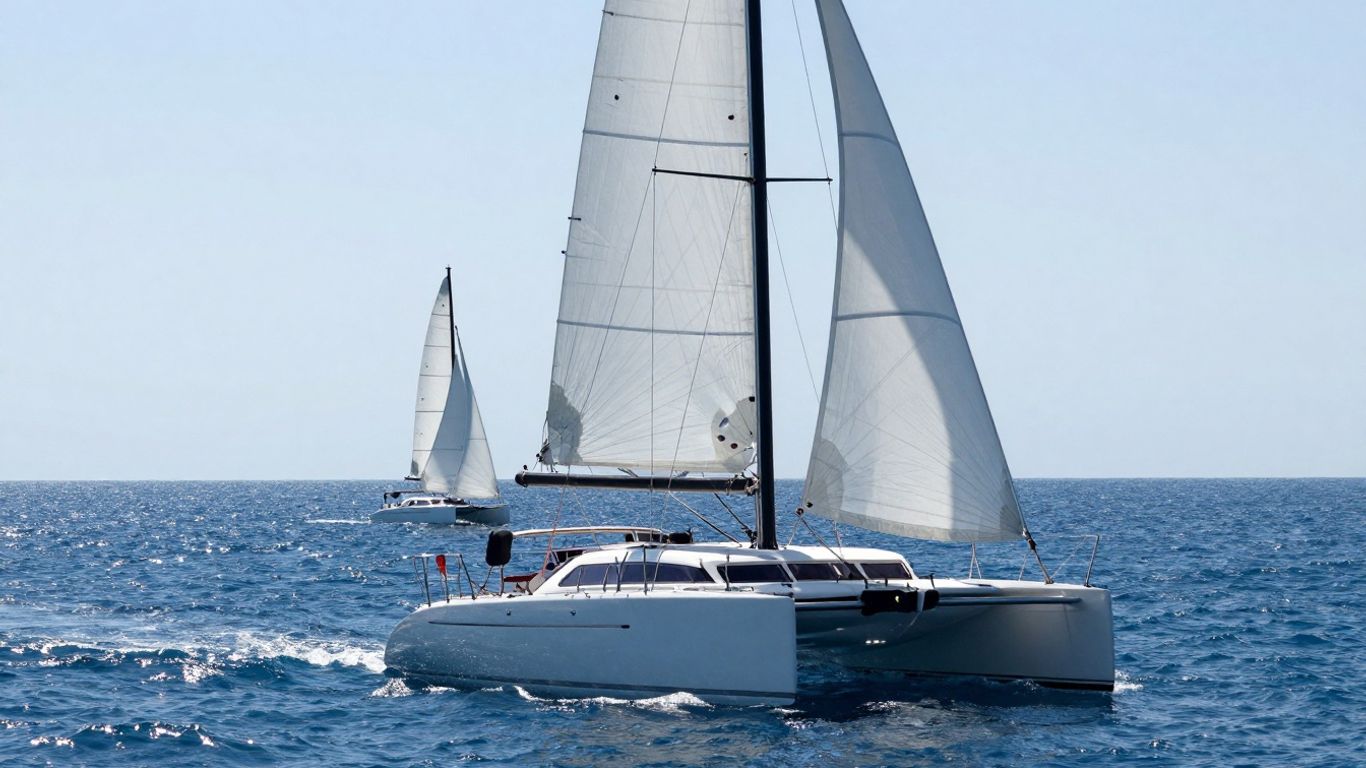
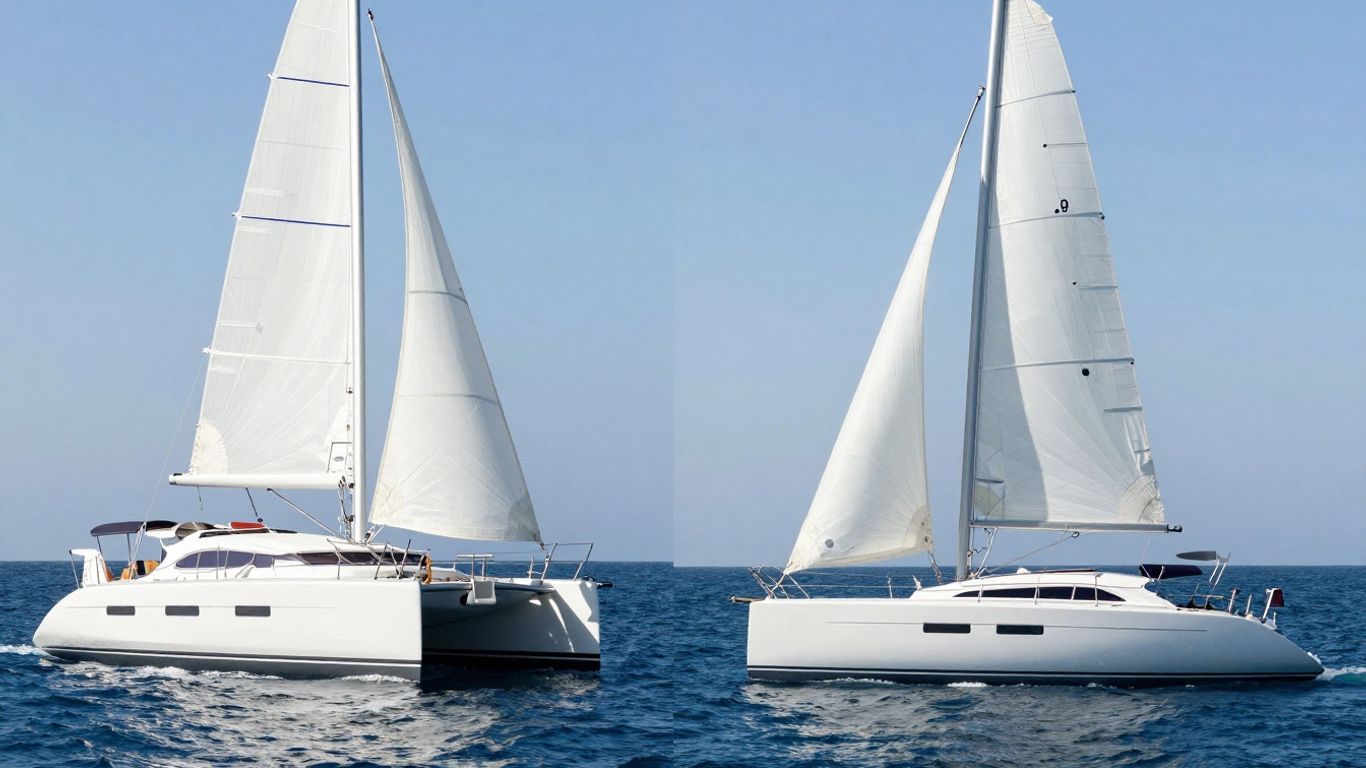
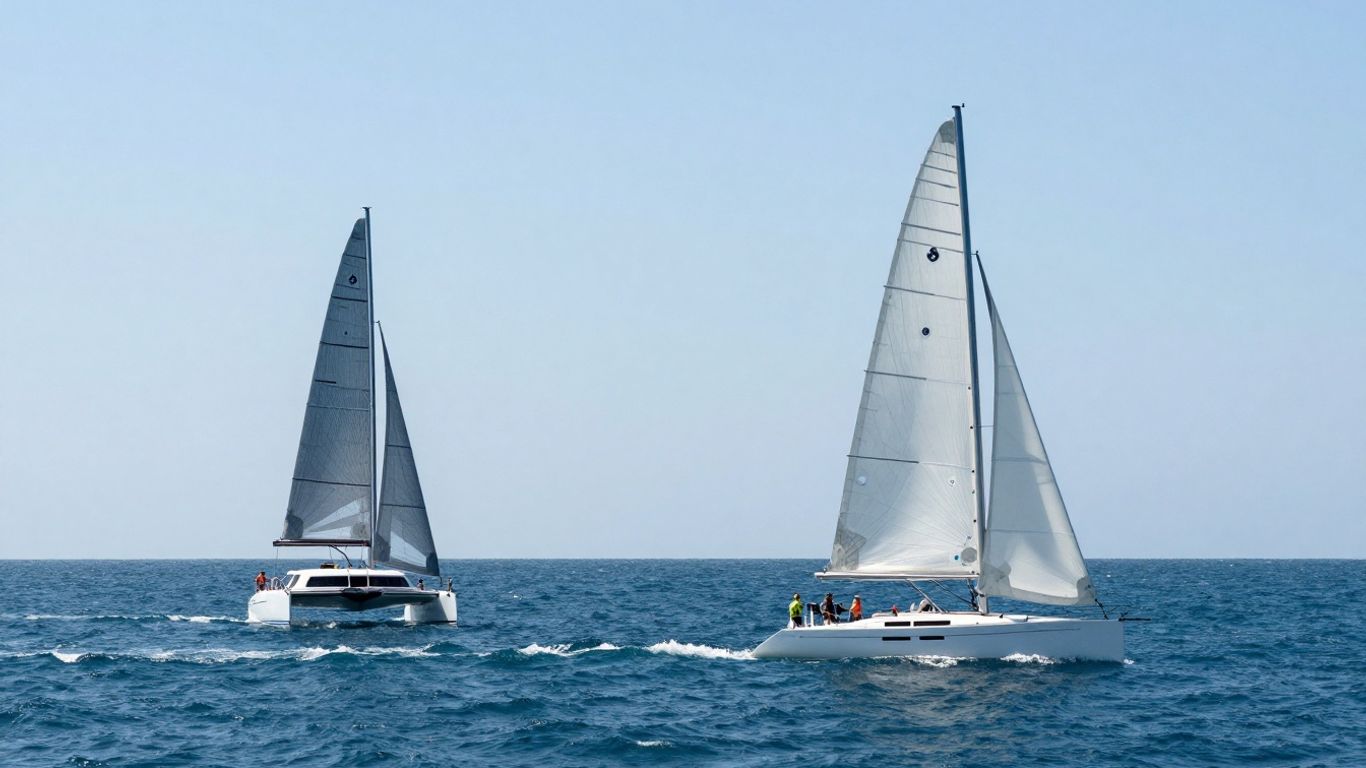
The most obvious difference is right there in the name. A monohull has, you guessed it, one hull. This is the classic boat shape most people picture. It’s a single, long body that cuts through the water. A catamaran, on the other hand, has two parallel hulls connected by a deck structure. Think of it like two boats joined together. This dual-hull setup is the root of many of the other distinctions between the two.
Monohull: Single, deep hull. This design often has a keel extending downwards for stability.
Catamaran: Two narrow, parallel hulls. These are typically connected by a deck or bridge.
Impact on Onboard Experience
Because of their hull designs, these boats feel very different when you’re on them. Monohulls tend to lean or heel when the wind fills the sails. Some people really enjoy this sensation, feeling the power of the wind. However, it can also mean things aren’t always level, which can be a bit tricky for moving around and can contribute to seasickness for some.
Catamarans, with their two hulls spread apart, are much more stable and stay pretty level, even when sailing. This means less leaning and a more consistent platform. It’s often described as a more relaxed way to travel, especially if you’re not used to the motion of a monohull.
Key Considerations for Selection
So, which one is right for you? It really comes down to what you want out of your time on the water. If you’re looking for maximum living space and a stable, level ride, a catamaran often wins. They tend to have wider, more open areas and separate cabins in each hull, offering more privacy.
If you prefer the traditional sailing feel, the sensation of heeling, and perhaps a more direct connection to the wind and waves, a monohull might be more your style. They can also sometimes be more nimble in certain sailing conditions, especially when sailing directly upwind.
The choice between a catamaran and a monohull isn’t about one being definitively ‘better’ than the other. It’s about matching the boat’s characteristics to your personal preferences, intended use, and comfort level.
Stability and Comfort at Sea
When you’re out on the water, how stable and comfortable your boat is can make or break the whole experience. This is where the differences between catamarans and monohulls really start to show.
The Advantage of Dual Hulls
Catamarans, with their two distinct hulls, have a naturally wide stance. This design means they don’t lean over much, or heel, when the wind fills the sails. Think of it like a wide-based table versus a tall, skinny one – the wide one is just harder to tip over. This level sailing is a big deal for comfort. You can walk around the boat, prepare food, or just relax without feeling like you’re constantly on a tilt.
Minimizing Seasickness and Fatigue
That lack of heeling is a game-changer for anyone who’s ever felt queasy on a boat. Because catamarans stay so much flatter, the motion is generally gentler. Less rocking and rolling means less chance of seasickness for passengers. It also means less fatigue for the crew. Trying to do tasks on a boat that’s constantly pitching and rolling is exhausting. A stable platform makes everything easier and more pleasant, especially on longer trips.
Level Ride vs. Heeling Experience
Monohulls, by their nature, are designed to heel. This leaning is part of the sailing sensation for many, offering a direct feel for the wind and the boat’s speed. However, this also means more movement, especially in choppier conditions. While some sailors enjoy the feeling of a heeling monohull, it can be challenging for guests or those new to sailing. Catamarans offer a different kind of sailing experience – one that prioritizes a steady, level ride. This can be particularly appealing for families or groups where comfort for everyone is a top priority.
Here’s a quick look at how they compare:
Feature
Catamaran
Monohull
Heeling
Minimal, stays mostly level
Significant, leans with the wind
Motion
Gentle, less pitching and rolling
Can be more pronounced, especially in waves
Seasickness
Generally reduced
Can be more of an issue for sensitive people
Onboard Ease
Easier to move around, less effort required
Requires more balance, especially when heeling
While a monohull’s heeling can provide a certain sailing feel, the inherent stability of a catamaran often translates to a more comfortable and accessible experience for a wider range of people, reducing the physical strain and potential for motion sickness.
Maximizing Living Space and Privacy
When you step onto a catamaran, the first thing that often strikes you is just how much room there is. It’s not just a little more space; it’s a whole different ballgame compared to many monohulls of similar length. This generous layout really changes how you live aboard.
Expansive Lounging Areas
Catamarans typically boast a much wider beam, which translates directly into more usable deck and interior space. Think about the main saloon – it’s often a large, open area with panoramic views, feeling more like a comfortable apartment than a boat cabin. Then there’s the cockpit, usually quite large and a natural extension of the indoor living area, perfect for dining al fresco or just relaxing. Many also feature a forward cockpit or even a flybridge, giving you multiple spots to spread out and enjoy the surroundings. This means less bumping elbows and more personal space, whether you’re at anchor or underway.
Cabin Layout and Personal Space
Privacy is a big win for catamarans. With cabins often spread across the two hulls, you get a real sense of separation. This is fantastic for families or groups, as everyone can have their own quiet retreat. Unlike some monohulls where cabins might be clustered together, the catamaran design naturally provides more distance and sound insulation between sleeping quarters. This setup makes longer trips much more comfortable for everyone onboard.
Galley Placement and Social Integration
The galley, or kitchen, on a catamaran is frequently located on the main deck, often integrated into the saloon. This keeps the cook connected with everyone else, whether they’re in the saloon or the cockpit. It makes meal prep feel less like a chore done in isolation and more like a social activity. This open-plan living arrangement really helps foster a sense of togetherness, making the boat feel like a true home on the water.
The design of a catamaran inherently spreads living areas across a wider platform. This separation of spaces, particularly for cabins in the hulls, offers a level of privacy that’s hard to match in a single-hulled vessel. It allows for distinct zones for relaxation, work, and sleeping, making it ideal for longer voyages or when traveling with multiple people.
Here’s a quick look at how space can differ:
Feature
Typical Catamaran (40ft)
Typical Monohull (40ft)
Saloon Area
Large, open, panoramic
More compact
Cockpit Space
Expansive, multi-use
Moderate
Cabin Privacy
High (hulls separated)
Moderate
Deck Space
Significantly more
Less
Performance and Handling Characteristics
When you’re out on the water, how a boat moves and responds is a big part of the experience. This is where the differences between catamarans and monohulls really show up, especially when you’re dealing with tight spots or just cruising along.
Maneuverability in Confined Spaces
This is a big one, especially if you’re new to sailing or often find yourself in busy marinas. Catamarans, with their twin engines set wide apart, are incredibly nimble. You can practically pivot them in place or even move them sideways, which makes docking a breeze. It’s like having power steering for a boat. Monohulls, with a single engine and rudder, require a bit more finesse and planning, especially when backing up or dealing with wind and current pushing you around.
Catamarans: Twin engines offer exceptional control for tight turns and sideways movement.
Monohulls: Single engine requires more skill and planning for precise maneuvering.
Benefit: Easier docking and anchoring for catamarans, especially for less experienced sailors.
Shallow Draft for Remote Exploration
If your dream is to explore those quiet, out-of-the-way coves or anchor in crystal-clear, shallow water, a catamaran often has the edge. Their hulls don’t sit as deep in the water as a monohull’s keel. This means you can get closer to shore, access beaches, and anchor in spots that a monohull simply can’t reach without worry. It opens up a whole new world of cruising grounds.
The ability to explore shallower waters means you can often find more secluded anchorages, away from the crowds, offering a more private and peaceful experience.
Speed and Efficiency on the Water
Generally speaking, cruising catamarans tend to be quicker than monohulls of a similar size. Their lighter weight and hull shape mean they slip through the water with less resistance. This can translate to faster passages, meaning you spend less time traveling and more time enjoying your destination. However, it’s worth noting that catamarans can be more sensitive to how much weight you load them down with; too much gear can slow them down more noticeably than on a monohull. When motoring, their efficiency is also often quite good, especially with twin engines that can be run at optimal RPMs.
Safety and Redundancy Features
When you’re out on the water, especially for longer trips or with family, safety is a big deal, right? Both catamarans and monohulls have their own ways of keeping you safe, but they approach it a bit differently. It’s not just about avoiding trouble; it’s also about having systems in place that keep working even if something goes wrong.
Built-in System Reliability
Catamarans often come with a built-in advantage when it comes to system redundancy. Think about engines, for example. Most cruising catamarans have two engines, one in each hull. This is a huge plus. If one engine has a problem, you still have another to get you home or to a safe harbor. This dual-engine setup also gives you amazing control when docking or maneuvering in tight spots, letting you spin the boat almost in its own footprint. Monohulls typically have a single engine, so a mechanical issue there means you’re relying on sails or assistance.
Beyond engines, many cruising catamarans are designed with duplicated critical systems. This could mean having two independent steering systems or multiple bilge pumps. It’s like having a backup for your backup. This thoughtful design means that even if one component fails, another is ready to take over, keeping you moving safely.
Handling Challenging Conditions
One of the most talked-about safety aspects is how these boats handle rough weather. Because catamarans have a wider stance and don’t heel (lean over) as much as monohulls, they offer a more stable platform. This level ride makes it easier for everyone onboard to stay comfortable and secure, reducing fatigue and the risk of falls. It also means less stress on the boat’s structure and rigging.
However, it’s important to note that the lack of heeling on a catamaran means that extra wind power goes directly into pushing the boat faster and putting more load on the sails and mast. This is why timely reefing – reducing sail area – is so important on a catamaran. Manufacturers provide clear guidelines on when to reef based on wind speed. Properly reefed, a catamaran can actually sail faster and safer in increasing winds.
A significant safety feature of most modern cruising catamarans is their inherent buoyancy. Even if a catamaran were to capsize (a very rare event in typical cruising conditions), the sealed hulls and foam construction mean it will likely remain afloat. This makes it a visible target for rescuers and provides a platform for survival, unlike a monohull that might sink if holed.
Family-Friendly Design Aspects
For families, especially those with young children or less experienced sailors, the stability and layout of a catamaran can be a real comfort. The wide, flat decks and spacious saloon mean more room to move around without the steep angles and confined spaces that can be common on monohulls. This open design makes it easier to keep an eye on children and reduces the chances of them getting into tricky situations.
Reduced Seasickness: The level sailing of a catamaran significantly cuts down on motion sickness, making the experience more enjoyable for everyone.
Easier Movement: Wide decks and secure handholds allow for safer movement around the boat, even in choppy conditions.
Accessible Water Access: Many catamarans feature swim platforms or steps that make getting in and out of the water much easier and safer.
While monohulls offer a classic sailing feel, the practical safety and comfort features of a catamaran often make it a more accessible and reassuring choice for a wider range of people, particularly those prioritizing a relaxed and secure cruising experience.
Economic Considerations: Purchase and Operation
When you’re looking at buying a boat, whether it’s a catamaran or a monohull, the money side of things is a big deal. It’s not just about the sticker price; you’ve got to think about what it’ll cost to keep it running and where you’ll park it.
Initial Investment Comparison
Generally speaking, catamarans tend to have a higher upfront cost compared to monohulls of a similar size. This is mostly due to their more complex construction – two hulls, two engines, and often more living space all add up. Think of it like buying a duplex versus a single-family home; the duplex usually costs more. However, this higher initial price can sometimes be offset by other factors down the line.
Long-Term Fuel Efficiency
This is where things can get interesting. While the initial purchase might be higher for a cat, their design often leads to better fuel economy when you’re motoring. The twin hulls create less drag in the water, meaning the engines don’t have to work as hard. This can translate into noticeable savings over time, especially if you do a lot of traveling under power. Monohulls, with their single, deeper hull, can sometimes be thirstier, though this really depends on the specific boat and how it’s sailed or motored.
Dockage and Maintenance Factors
Dockage is a big one. Because catamarans are wider, they often take up more space at the marina. This can mean higher slip fees, sometimes even requiring two slips depending on the marina’s layout. Monohulls, being narrower, usually fit into standard slips more easily and at a lower cost. Maintenance can also be a bit more complex on a catamaran, with two engines, two rudders, and more surface area to care for. However, some argue that the reduced stress on the structure from not heeling as much can lead to less wear and tear in certain areas over the long haul. It’s a trade-off that requires careful consideration based on your cruising plans and local marina costs.
The total cost of ownership is a mosaic of many pieces. Don’t just look at the purchase price; factor in ongoing expenses like fuel, marina fees, insurance, and routine upkeep. Sometimes a slightly more expensive boat upfront can be more economical to run day-to-day.
Suitability for Different Cruising Styles
Liveaboard Readiness
When you’re thinking about living aboard your boat full-time, the choice between a catamaran and a monohull really comes down to what you value most in a home on the water. Catamarans often win out for liveaboards due to their expansive living spaces. The wide beam means you get a much larger saloon, often with a galley that feels more like a home kitchen, and plenty of room for lounging. Plus, the cabins are typically spread across the two hulls, offering more privacy for everyone. This setup can make a big difference when you’re sharing a boat for extended periods.
On the other hand, monohulls offer a more traditional sailing feel and can be more budget-friendly for long-term ownership. While they might have less overall living space, many liveaboards appreciate the motion of a monohull and its ability to sail closer to the wind, which can be a plus for covering ground efficiently. It really depends on whether you prioritize a spacious, stable platform or a more classic, performance-oriented sailing experience.
Family Vacations and Group Travel
For family trips or holidays with a group of friends, a catamaran often shines. The generous deck space and the level ride it provides are huge advantages. Think about it: kids can move around more easily without constant worry about them tumbling, and adults can relax without the constant lean that comes with sailing a monohull. The separate hulls also mean more personal space and privacy for couples or families within the larger group, which can be a real lifesaver on longer trips.
Many catamarans come equipped with amenities like generators and water makers, which are fantastic for keeping everyone comfortable and supplied, especially when you’re away from shore power. This makes them a very appealing option for relaxed group getaways where comfort and convenience are key.
Exploring Secluded Destinations
If your dream is to drop anchor in quiet, out-of-the-way coves and explore shallow waters, the draft of your vessel becomes a major consideration. This is where catamarans often have a distinct edge. Their twin hulls typically draw much less water than a monohull’s deep keel. This shallower draft allows you to get into anchorages that are simply inaccessible to deeper-keeled monohulls, opening up a world of more secluded and pristine cruising grounds.
The ability to explore shallow bays and get closer to shore is a significant draw for many cruisers. This opens up anchorages that are often too shallow for monohulls, providing access to more tranquil and less crowded spots. It’s a game-changer for those who love discovering hidden gems.
While monohulls might offer a more direct sailing feel and potentially better performance when sailing upwind, the access that a shallow-draft catamaran provides to remote locations is hard to beat for the explorer at heart. It’s about trading a bit of upwind performance for the freedom to go where others can’t.
Environmental Impact and Sustainable Options
Space for Renewable Energy Systems
When we talk about being kinder to the planet while out on the water, the design of a boat really matters. Catamarans, with their wide decks and generous beam, naturally offer more real estate for things like solar panels and even small wind generators. This means you can often fit more power-generating gear onto a cat, which is great for reducing reliance on fossil fuels. It’s not just about slapping a few panels on; the layout of a catamaran lends itself to integrating these systems more effectively, making them a solid choice for anyone looking to cruise with a lighter footprint.
Efficiency of Propulsion
This is where the hull shape really comes into play. Catamarans, generally speaking, have less drag in the water compared to monohulls. Think of it like trying to push two narrow logs through the water versus one big, wide one. The two logs (the hulls of a cat) often move through the water more easily. This means that for the same amount of power, a catamaran can often go faster, or it can use less fuel to maintain a certain speed. This efficiency translates directly into lower emissions and a more sustainable journey, especially if you’re doing a lot of motoring.
Reduced Drag and Fuel Consumption
Building on the efficiency point, the reduced drag of a catamaran’s twin hulls is a significant factor. Less resistance means the engines don’t have to work as hard, leading to noticeably lower fuel consumption. This isn’t just a small difference; over the course of a long cruise, it can add up to substantial savings and a much smaller carbon output. Plus, that shallower draft we talked about earlier? It also contributes to less wetted surface area, further reducing drag and improving that all-important fuel economy. It’s a win-win for your wallet and the environment.
The choice between a catamaran and a monohull can have a real impact on your environmental footprint. Catamarans often provide a better platform for integrating sustainable technologies and benefit from inherent design efficiencies that lead to lower fuel use. This makes them an attractive option for the eco-conscious sailor looking to minimize their impact while exploring the world’s waters.
The Sailing Sensation: A Matter of Preference
The Thrill of Heeling
For some sailors, the experience of sailing is all about the connection to the wind and waves, and that often means feeling the boat lean. Monohulls, with their single hull and ballast, naturally heel over when the wind fills the sails. This heeling can be a thrilling sensation, giving you a direct feel for the boat’s performance and the power of the elements. It’s a dynamic dance with nature, where the angle of the boat tells a story of wind speed and direction. Many who love this aspect find it an exhilarating part of being under sail.
Upwind Performance and Leeway
When sailing into the wind, monohulls often have an edge. Their deeper keels help them point closer to the wind and reduce leeway – that sideways drift that happens when you’re sailing upwind. This means that on a beat to windward, a monohull can often make better progress towards a destination. Catamarans, while capable, might tack more slowly and have a wider turning circle, which can make them less efficient when sailing directly into the wind. However, for many cruising scenarios, this difference is minor, especially when considering the overall journey and comfort.
Direct Feedback Under Sail
Sailing a monohull often provides a more direct sense of what the boat is doing. You can feel the wind in the sails, the water moving past the hull, and the rudder’s response through the tiller or wheel. This tactile feedback is something many experienced sailors cherish. Catamarans, with their wider stance and less heeling, can sometimes feel more insulated from the sea. While this contributes to comfort, it can mean a less pronounced connection to the sailing experience for those who seek that direct communication from the vessel.
Choosing the Right Vessel for Your Ambitions
So, you’ve been dreaming about hitting the water, maybe for a weekend getaway or a grand adventure. The big question looms: catamaran or monohull? It’s not just about picking a boat; it’s about picking the right partner for your cruising style and what you want to get out of your time on the water. Let’s break down how to make that choice.
Aligning Vessel Choice with Experience
Your sailing background plays a big role. If you’re new to sailing, a monohull might feel more familiar, offering that classic sailing sensation of heeling. It’s often easier to get a feel for the wind and the boat’s response. However, if you’re looking for a more relaxed experience, especially with guests who might be less experienced or prone to seasickness, a catamaran’s stable, level ride is a huge plus. Think about how much you want to be actively sailing versus cruising comfortably. For those who prefer a more hands-on sailing feel and don’t mind a bit of lean, a monohull could be your pick. If ease of handling, especially in tight spots with twin engines, and a steady platform are more your speed, a catamaran shines.
Prioritizing Comfort Over Performance
This is where the catamaran often takes the lead for many. The wider beam and dual hulls mean significantly more living space and a much more stable platform, both at anchor and underway. Imagine having a large, open saloon, spacious cabins with real privacy, and deck areas that feel more like a patio than a cockpit. This translates to less fatigue on longer trips and a more enjoyable experience for everyone onboard, especially if you plan on entertaining or have a larger group. While monohulls can be excellent performers, especially upwind, the comfort factor on a cat is hard to beat for extended cruising or for those who value a calm environment.
Balancing Space, Stability, and Sailing
Ultimately, the decision comes down to what you value most. Are you chasing the thrill of a spirited sail, leaning into the wind with a monohull? Or do you dream of spacious lounging areas, easy access to the water, and a steady platform for entertaining, all hallmarks of a catamaran? Consider your typical cruising grounds too. If you plan on exploring shallow bays or anchoring in secluded spots, a catamaran’s shallow draft can be a game-changer. If you’re focused on pure sailing performance and the sensation of heeling, a monohull might be more appealing. It’s about finding that sweet spot where the boat’s characteristics match your personal ambitions for life on the water.
Here’s a quick look at how they stack up for different priorities:
Feature
Monohull Advantage
Catamaran Advantage
Stability
Heeling offers sailing feedback
Level ride, less seasickness
Space
Can feel more connected to the water
Expansive living areas, privacy
Performance
Better upwind ability, can feel more agile
Often faster off the wind, easier to handle in some conditions
Draft
Deeper draft for stability
Shallower draft for accessing more anchorages
The best boat isn’t necessarily the one that sails the fastest or points the highest. It’s the one that allows you to live your dream, comfortably and safely, in the way you envision it. Don’t be afraid to prioritize what truly matters for your adventures.
Picking the perfect place for your big dreams is super important. Whether you’re aiming for a relaxing getaway or an exciting adventure, the right spot makes all the difference. Think about what you want to do and see, and let that guide you. We can help you find that amazing destination that fits your plans perfectly. Visit our website to start planning your unforgettable journey today!
Making Your Choice: Catamaran or Monohull?
So, after looking at all this, the big question really comes down to what you want from your time on the water. If a smooth ride, lots of room to spread out, and easy handling are top of your list, a catamaran often makes a lot of sense. They’re great for families, groups, or anyone who just wants a more relaxed experience. On the other hand, if you love the feel of a boat heeling over, enjoy a more traditional sailing feel, and perhaps are more focused on upwind performance, a monohull might be your preference. Both have their own charm and purpose. Think about who you’ll be sailing with, where you plan to go, and what kind of memories you want to make. The best boat is really the one that fits your adventure perfectly.
Frequently Asked Questions
Which type of boat is more stable, a catamaran or a monohull?
Catamarans are generally more stable because they have two hulls. This design means they don’t tilt (or ‘heel’) as much as monohulls when the wind pushes on the sails. This makes for a smoother ride and is easier on people who get seasick.
Do catamarans offer more living space than monohulls?
Yes, catamarans usually have much more living space. Their wide design spreads out the living areas, creating bigger rooms, decks, and cabins. It feels less crowded, especially when you have a group of people.
Is a catamaran easier to steer than a monohull?
Catamarans are often easier to handle, especially in tight spots like marinas. They usually have two engines, one in each hull, which gives them great control for turning and docking. Monohulls typically have just one engine, making them a bit trickier to maneuver.
Can catamarans go into shallow water?
Yes, catamarans have a shallower draft, meaning they don’t sit as deep in the water. This allows them to get closer to shore, explore hidden beaches, and anchor in spots that deeper monohulls can’t reach.
Are catamarans faster than monohulls?
Generally, catamarans can be faster than monohulls of the same size. Their design creates less drag in the water, and they are often lighter. However, this can depend on the wind and sea conditions.
Which boat is better for families?
Catamarans are often considered better for families. They offer more space, a more stable and level ride which reduces seasickness, and often have more features that make them comfortable and safe for children.
Are catamarans more expensive than monohulls?
Catamarans usually cost more to buy initially because of their complex dual-hull construction. They can also cost more to dock because they take up more space. However, they can be more fuel-efficient, which saves money over time.
Can a catamaran flip over?
While it’s very rare, it is theoretically possible for a catamaran to flip in extreme storm conditions. However, modern cruising catamarans are designed to be very stable, and they are more likely to stay afloat if capsized than a monohull might be.