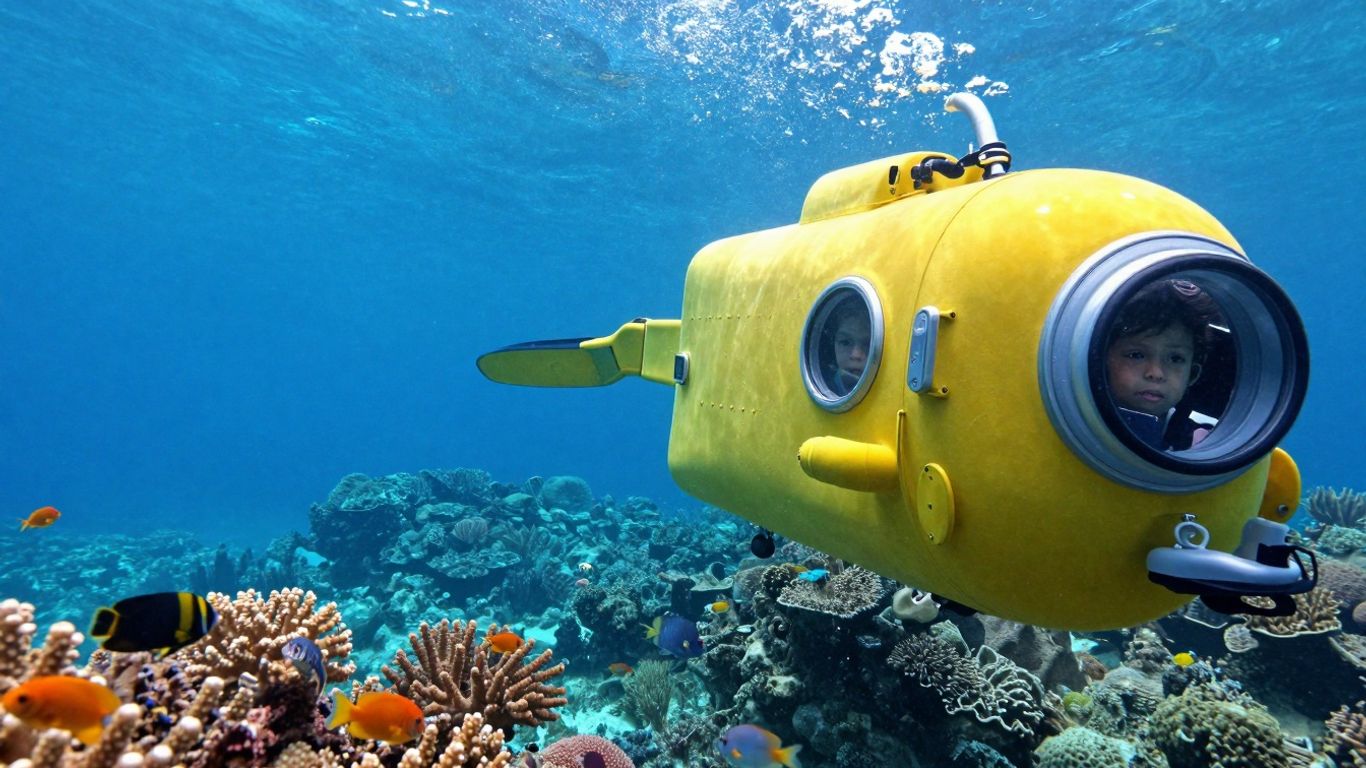
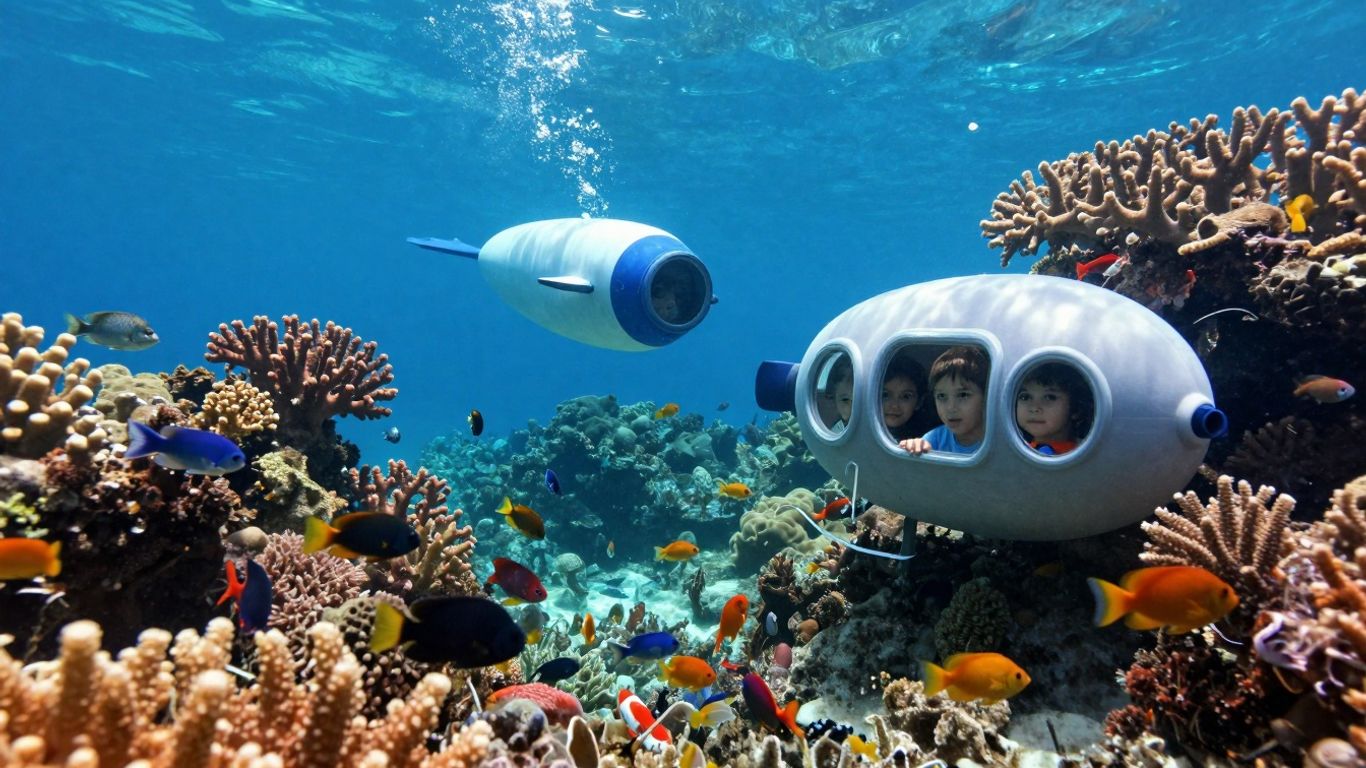
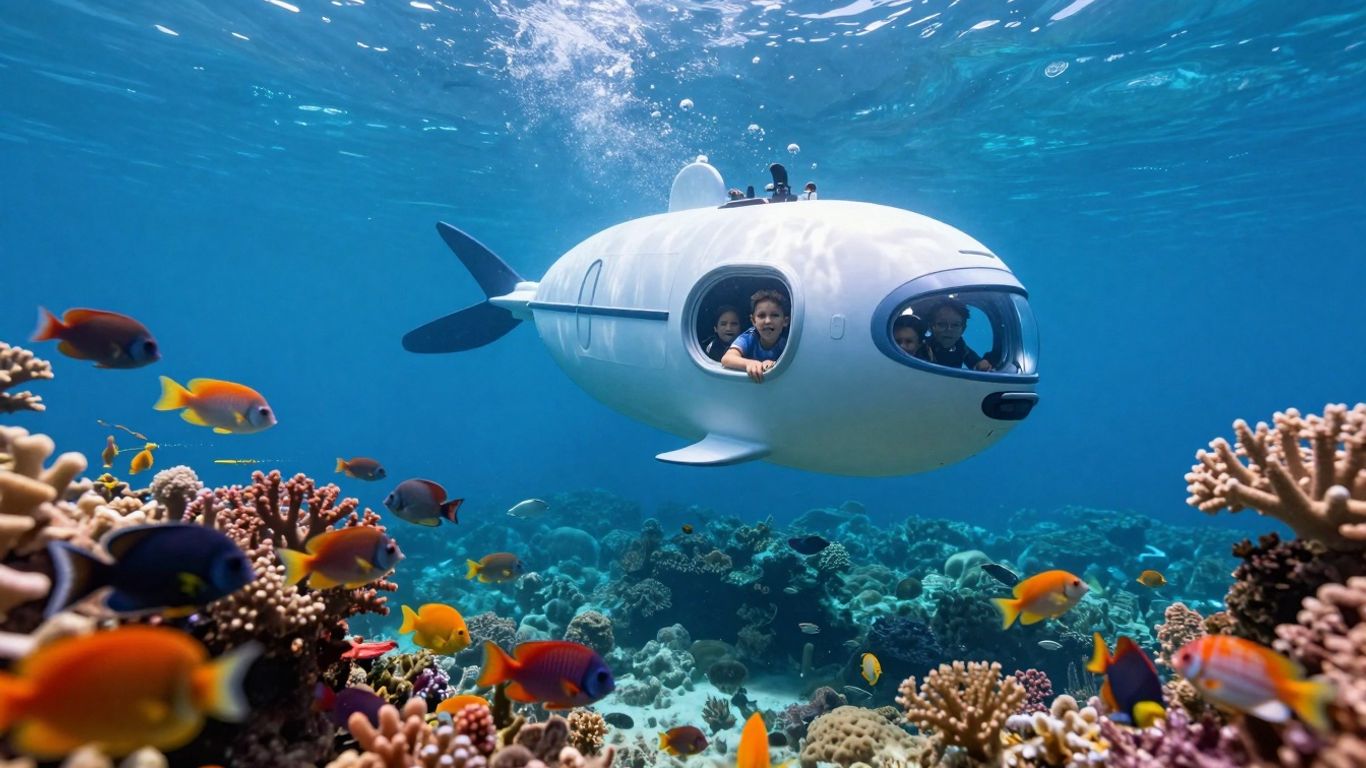
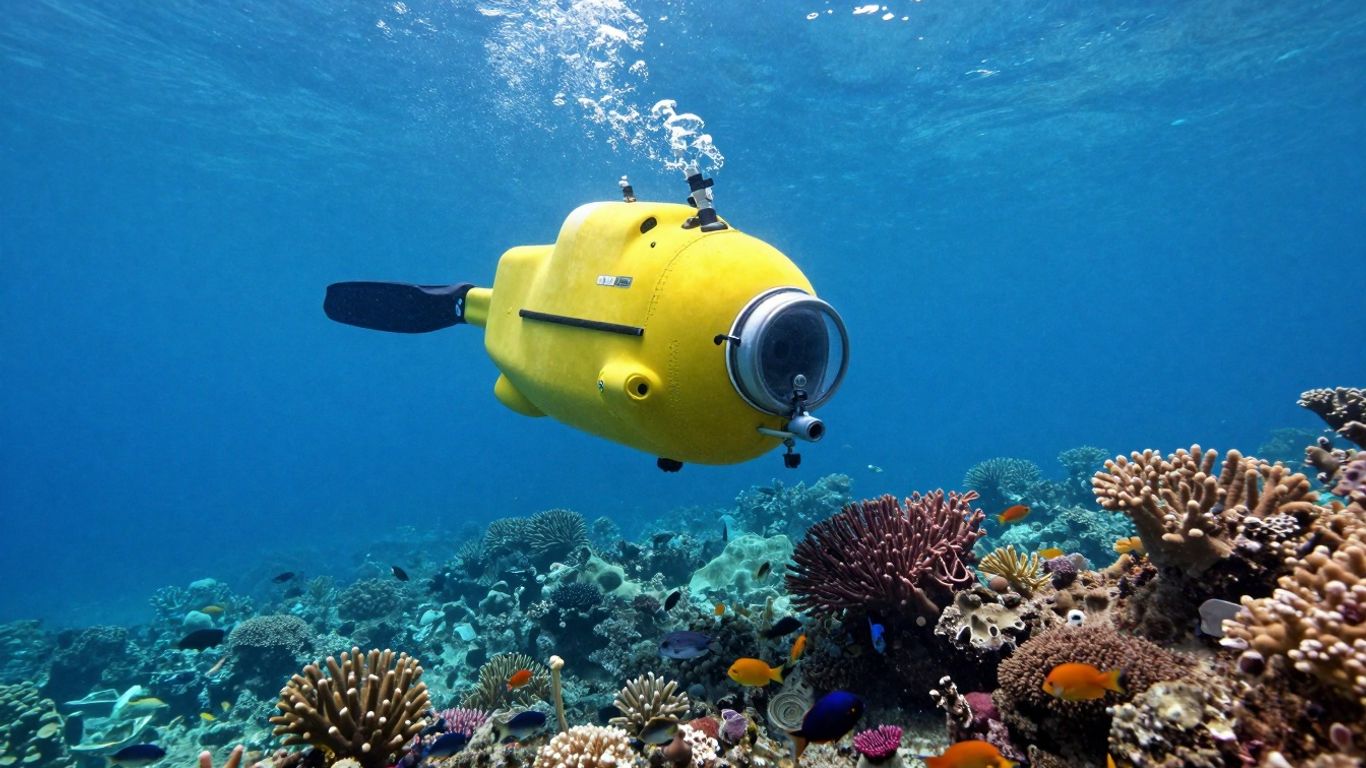
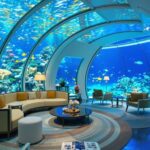
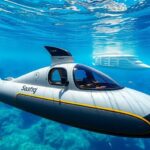
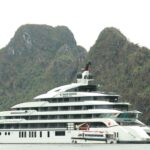
Ever wondered what lies beneath the waves, far beyond where regular swimmers can go? Well, imagine having your own private submarine attached to a luxury yacht. That’s exactly what Yacht submersible dives offer – a unique way to explore the ocean’s hidden spots. It’s not just for scientists anymore; it’s an adventure for anyone curious about the underwater world. You can see shipwrecks, colorful reefs, and marine life without getting wet or worrying about dive times. It’s a pretty cool way to see parts of the ocean that most people only dream about.
Key Takeaways
Yacht submersible dives provide special access to out-of-the-way ocean spots and deep areas, going much further than typical scuba diving.
These expeditions can reach depths of up to 3,000 feet, opening up new areas for exploration.
Popular places for these trips include the Great Barrier Reef, Belize’s Blue Hole, and Corsica’s Lavezzi Marine Reserve.
The dives can be customized for different interests, like seeing old shipwrecks, observing deep ocean life, or even helping with science research.
Some trips offer ways for beginners to try scuba diving, making these underwater adventures accessible to more people.
Unveiling the Ocean’s Depths with Yacht Submersible Dives
Exclusive Access to Remote Underwater Locations
Imagine stepping off your yacht and descending into a world few ever get to see. Having a submersible right there with your charter means you’re not limited by typical dive times or depths. It’s like having a private key to explore places that are usually out of reach. You can visit shipwrecks that have become bustling artificial reefs, or glide over coral formations that stretch far down into the blue. These aren’t just sights; they’re underwater museums, full of history and natural wonders. You get to see these spots on your own schedule, at your own pace, finding those quiet, untouched corners of the ocean.
Beyond the Limits of Traditional Scuba Diving
Forget about air tanks and the clock ticking down. A submersible lets you stay underwater for much longer, without worrying about decompression stops. This means you can really take your time and soak in the environment. You’re in a controlled space, protected from the elements and the pressure, making it a comfortable way to experience the ocean’s depths. Large windows give you an amazing, up-close view of everything happening outside.
A Private Gateway to Marine Secrets
Your underwater adventure can be completely customized. If you’re fascinated by shipwrecks, a submersible that can reach depths of 450 feet or more offers a unique chance to see these underwater time capsules. Or, if you’re curious about what lies in the deeper, darker parts of the ocean, an exploration down to 650 feet or even 1,000 feet can reveal marine life rarely seen by anyone. It’s all about matching the vessel’s capabilities to what you want to discover. This kind of exploration isn’t just about sightseeing; it can also be about contributing to science, observing or even helping with research. It adds a layer of purpose to the adventure, making you part of an exploration team rather than just a tourist.
Curating Your Bespoke Underwater Adventure
Planning a trip that includes exploring the ocean floor with a submersible is all about making it uniquely yours. It’s not just about picking a boat; it’s about crafting an entire underwater journey tailored to what you want to see and experience. Think about what captures your imagination – maybe it’s a specific shipwreck that’s become a home for marine life, or perhaps you’re drawn to untouched coral gardens far from the usual spots. Your charter team can help map out an itinerary that hits all your must-see locations, making sure the yacht you choose is equipped for the task. Some expedition yachts are practically floating research stations, complete with all the gear and even a submersible for those really deep explorations.
When you’re looking at yachts, consider what kind of underwater sights you’re aiming for. Are you interested in shallow reefs, or do you want to go much deeper, perhaps to see wrecks that are out of reach for regular scuba divers? The capabilities of the submersible will really dictate how far you can go. For instance, some can take you down to depths of 1,000 feet or more, opening up a whole new world of discovery. The freedom to explore at your own pace, without the constraints of traditional diving, is what makes this experience so special.
Here’s a quick look at what to consider when picking your submersible-equipped yacht:
Your Interests: What marine life, geological features, or historical sites are you most eager to see?
Depth Capabilities: What depths can the submersible safely reach, and does this align with your exploration goals?
Yacht Support: Does the yacht have the necessary equipment and crew to support submersible operations smoothly?
Location: Are there specific regions known for incredible underwater sights accessible by submersible, like those found around Fiji islands?
Planning a submersible adventure means you’re not just a tourist; you’re an explorer. You get to decide the schedule, the duration, and the focus of your underwater excursions. This personalized approach ensures a deeply rewarding experience, far removed from crowded tour routes.
It’s about creating an unforgettable journey beneath the waves, one that perfectly matches your curiosity and sense of adventure. Whether you’re interested in the vibrant life of a coral reef or the silent history of a sunken vessel, the right submersible charter can make it happen. You might even find yourself exploring areas like those near Savusavu, Vanua Levu, known for their unique underwater landscapes.
Premier Destinations for Yacht Submersible Exploration
When you’re looking to explore the underwater world from the comfort of your own private vessel, certain spots just stand out. These aren’t your everyday snorkeling locations; they’re places that really benefit from the advanced capabilities a submersible brings to a yacht charter. Think about places where the real magic happens a bit deeper, or where getting to a specific wreck or reef requires a bit more than just a dinghy ride.
The Great Barrier Reef’s Shipwreck Secrets
Australia’s Great Barrier Reef is famous, and for good reason. While the shallow parts are stunning, some of the most historically significant wrecks lie deeper. These aren’t just old boats; they’ve become vibrant artificial reefs, teeming with life. A submersible lets you get up close to these underwater time capsules without disturbing the delicate ecosystem that has grown around them. It’s a chance to see history and nature intertwined in a way that’s hard to replicate otherwise. You can spend more time observing the marine life that calls these wrecks home, from schools of fish to larger predators, all from the safety and comfort of your submersible.
Belize’s Blue Hole: A Natural Wonder
This massive, perfectly circular sinkhole is a geological marvel. While it’s a popular spot for experienced divers, a submersible offers a unique perspective. You can descend into the vast, dark blue, observing the sheer walls and unique geological formations that make this place so famous. It’s a chance to witness the sheer scale of this natural wonder without the time constraints or physical demands of traditional diving. The submersible allows for a more leisurely observation of the marine life that inhabits these deeper, cooler waters, which differ from the reef dwellers found closer to the surface.
Corsica’s Lavezzi Marine Reserve
Located in the Strait of Bonifacio, this protected area is known for its crystal-clear waters and abundant marine life. The granite formations create a dramatic underwater landscape, dotted with Posidonia meadows and home to various fish species. A submersible allows you to explore these underwater gardens at your own pace, observing the intricate details of the ecosystem. You can spend extended periods examining the unique rock formations and the diverse sea life that thrives in this protected environment, offering a tranquil yet fascinating exploration.
The Thrill of Deep-Sea Exploration
Discovering Uncharted Coral Reefs Beyond Sunlight Zones
Going down deep, like hundreds of feet, is a whole different ballgame. The light from the surface fades fast, and the pressure really builds up. It’s a bit like visiting another planet, honestly. But guess what? Life finds a way. You can find amazing coral formations and creatures that have adapted to this dark, high-pressure world. These are the frontiers where scientists are finding new things and learning how our changing planet affects these hidden places. It’s a chance to see parts of the ocean that are still a big mystery to us.
Witnessing Marine Life in Extreme Conditions
Down in the deep, you’ll see life that’s pretty incredible. Think about fish that glow in the dark or creatures that look like they’re from another world. They’ve figured out how to survive where it’s cold, dark, and the weight of the water is immense. Seeing these animals in their natural home, where they’ve evolved to thrive, is really something else. It’s a stark reminder of how tough and adaptable life can be.
The Awe-Inspiring Nature of Deep Ocean Encounters
There’s a certain feeling you get when you’re that far down. It’s quiet, it’s dark, and you’re looking out through a window at a world few people ever get to see. It’s humbling, really. You realize how much of our planet is still unknown and how much is going on beneath the waves that we don’t even know about yet. It’s not just about seeing cool stuff; it’s about feeling that sense of wonder and realizing how vast and mysterious the ocean truly is.
Here’s a glimpse of what you might encounter:
Bioluminescent organisms that create their own light.
Unique fish species adapted to high pressure and low temperatures.
Vast, unexplored underwater landscapes.
The sheer scale of the deep ocean is hard to grasp. It’s a place of extremes, where life persists in ways we are only beginning to understand. Experiencing it firsthand offers a profound perspective on our planet.
Collaborating with Marine Scientists
It’s pretty amazing to think that most of our oceans, like 95% according to NOAA, are still totally unknown. That’s where these submersibles really shine. They’re not just for fun trips; they’re actually tools that help scientists get a better look at what’s going on down there. Imagine being on a yacht and then hopping into a submersible to help researchers study coral reefs that are way too deep for regular scuba divers. It’s a chance to see things most people never will and maybe even help discover new species. Some expeditions even work with programs like the Smithsonian’s Deep Reef Observation Program, which is pretty cool if you’re into that sort of thing. It’s a way to add a real purpose to your adventure, contributing to actual scientific discovery.
Assisting in Coral Reef Research
Coral reefs are facing a tough time globally. Things like warming waters and pollution can really damage them. Some places are actively working to fix this. Think of it like gardening, but underwater. Teams are growing new corals in nurseries and then transplanting them back onto damaged reefs. Your charter could potentially support organizations doing this work, maybe through a donation or by choosing operators who partner with these groups. It’s a way to give back to the environment you’re enjoying.
Monitoring Deep Reef Ecosystems
These deep-sea vehicles are also super useful for keeping an eye on reef health in places that are hard to reach. Scientists are using them to check out how things like changing ocean temperatures or pollution are affecting these deeper ecosystems. They’re trying to figure out if these deeper reefs might play a role in helping the shallower ones bounce back. It’s like having a remote sensing station, but way more exciting. You get to see firsthand the impact of environmental changes and the resilience of marine life in these extreme conditions. It’s a different world down there, with unique creatures adapted to the pressure and darkness.
Contributing to Oceanographic Discovery
When you take a trip like this, you’re not just sightseeing; you’re part of something bigger. The information gathered from these submersible trips is actually being published in scientific journals. Think about it: you could be in a submersible, observing a shipwreck that’s become a new home for marine life, and that observation could end up in a research paper. It’s a direct link to advancing our knowledge of the planet. These expeditions are really pushing the boundaries of what we know about the ocean, making them more than just a luxury experience – they’re a contribution to science. It’s a unique way to explore remote diving locations and stick to your own underwater schedule, making the whole trip feel more personal and impactful. You can even find private yacht charters that cater to these kinds of specialized excursions.
When you’re exploring, being responsible is key, especially with a submersible. You want to see everything without disturbing it. This means:
Maintaining a safe distance from marine life. No chasing or touching!
Avoiding contact with the seabed or coral structures. The submersible’s technology helps with this, but it’s still about careful piloting.
Following local guidelines for protected areas. These are in place for a reason.
Minimizing waste and ensuring nothing is left behind.
A Family-Friendly Approach to Underwater Discovery
Taking your family on a submersible adventure is a fantastic way to introduce younger ones to the wonders of the ocean. It’s a chance to see marine life up close without the complexities of traditional diving. Think of it as a private viewing room for the underwater world, making it accessible and exciting for everyone.
Introducing Children to Marine Life
Submersibles offer a unique window into the ocean’s inhabitants. Imagine your child’s face lighting up as they spot a sea turtle gliding by or a school of colorful fish darting through coral. These experiences are far more engaging than just reading about them. The controlled environment means everyone can relax and focus on the incredible sights. It’s a gentle introduction to the vastness of marine ecosystems, sparking curiosity and a sense of wonder.
Safe and Accessible Snorkeling Experiences
While submersibles are the main event, many yacht expeditions also facilitate easy access to snorkeling. With the yacht moored close to the reef, getting into the water is straightforward. Some expeditions even provide resting stations, allowing less experienced swimmers to venture further and enjoy the underwater scenery. This makes it possible for the whole family to participate in water activities, creating shared memories.
Inspiring Future Marine Enthusiasts
An experience like this can truly ignite a passion for the ocean. Seeing the delicate balance of coral reefs and the diversity of marine creatures firsthand can inspire a lifelong appreciation for conservation. It’s about more than just a vacation; it’s about planting seeds of interest that could lead to future careers or a commitment to protecting our planet’s waters. For families looking for unique travel experiences, exploring places like Kadavu’s top beaches offers a great starting point for younger adventurers.
The ease of access and the visual spectacle from a submersible create an unparalleled educational opportunity. It transforms abstract concepts about marine biology into tangible, unforgettable moments for children.
The Role of Submersibles in Marine Research
Exploring the Vast Unknowns of the Ocean
It’s pretty wild to think that most of our planet’s oceans, like 95% according to scientists, are still a complete mystery. That’s where these submersibles really come into their own. They’re not just for a fun ride; they’re actually tools that help researchers get a much better look at what’s happening way down there. Imagine being on a yacht and then hopping into a submersible to help scientists study coral reefs that are just too deep for regular scuba divers. It’s a chance to see things most people never will and maybe even help find new species. Some trips even work with programs that are studying these deep reefs, which is pretty cool if you’re into that sort of thing. It’s a way to add some real purpose to your adventure, contributing to actual scientific discovery.
Studying the Impact of Environmental Changes
These deep-sea vehicles are also super useful for keeping an eye on reef health in places that are hard to get to. Scientists are using them to check out how things like changing ocean temperatures or pollution are affecting these deeper ecosystems. They’re trying to figure out if these deeper reefs might play a role in helping the shallower ones bounce back. It’s like having a remote sensing station, but way more exciting. You get to see firsthand the impact of environmental changes and the resilience of marine life in these extreme conditions. It’s a different world down there, with unique creatures adapted to the pressure and darkness.
Identifying New Species and Ecosystems
Submersibles give us access to parts of the ocean that have been out of reach for ages. Think about it: we’re talking about depths of 650 feet, even 1,000 feet or more. At these levels, it’s a completely different environment. The light from the surface barely gets through, and the pressure is intense. Yet, life finds a way. These are the places where marine biologists are making new discoveries, studying how things like climate change affect these deep ecosystems. It’s a chance to see the ocean’s hidden corners, the parts that are still a puzzle to us. You get a clear view through large acrylic windows, seeing this alien world up close. It’s a real look into how life adapts to extreme conditions.
The ocean is vast, and most of it remains a mystery. Submersibles offer a unique way to peek into these unknown territories, revealing wonders that have remained hidden for millennia.
Here’s a look at what makes this kind of exploration so special:
Exclusive Access: Reach depths far beyond what traditional scuba can manage.
Extended Observation: Spend more time exploring without the constraints of air tanks and decompression.
Controlled Environment: Experience the underwater world in comfort and safety, protected from the elements.
Personalized Exploration: Tailor your dives to focus on shipwrecks, unique coral formations, or specific scientific interests.
Comfort, Safety, and Unrestricted Exploration
Experiencing the Depths in a Controlled Environment
Forget about the usual worries that come with exploring the ocean. When you’re on a yacht with a submersible, you’re in a completely different kind of setup. It’s like having your own personal bubble that takes you down into the water. This means you’re protected from the cold, the pressure changes, and any unexpected currents. It’s a really secure way to see what’s going on below the surface, letting you focus entirely on the amazing sights around you.
Extended Dives Without Decompression Stops
One of the biggest game-changers with submersibles is how long you can stay down. Unlike scuba diving, where you have to keep an eye on air supply and worry about decompression sickness after spending too much time at depth, submersibles don’t have these limits. You can spend hours exploring a shipwreck or a deep coral garden without any of that stress. This really lets you soak it all in and see things at a relaxed pace.
Immersive Viewing Through Large Acrylic Windows
The view from inside a submersible is pretty spectacular. Most are built with large, clear acrylic windows that give you a panoramic look at the underwater world. It feels like you’re right there, surrounded by the ocean. You can see fish swimming by, the details of coral formations, and the vastness of the deep sea without any barriers. It makes the whole experience feel incredibly real and engaging.
Safety First: The submersible itself is designed with multiple safety features, making it a reliable way to explore.
Comfort is Key: You’re in a climate-controlled cabin, often with comfortable seating.
Extended Exploration: Stay underwater for longer periods, allowing for more thorough observation.
This kind of exploration opens up parts of the ocean that are just not accessible to most people. It’s a chance to see environments that are usually hidden from view, all while feeling completely safe and comfortable.
Iconic Submersible Dive Sites
The Stella Maris Shipwreck: An Artificial Reef
When you think about exploring underwater, shipwrecks often come to mind. They’re like time capsules, holding stories of the past. The Stella Maris Shipwreck is a prime example. It’s not a natural formation, but rather an old vessel that has settled on the seabed, and over time, it’s transformed into a thriving artificial reef. Marine life has made this wreck its home, with corals attaching themselves to the metal and countless fish darting in and out of its structure. A submersible allows for an up-close look at this fascinating blend of history and nature. You can glide around the wreck, observing the intricate details of the ship and the vibrant ecosystem that has developed there, all without disturbing the delicate balance.
Exploring Depths of 650 Feet and Beyond
Some of the most intriguing parts of the ocean lie far below where traditional scuba divers can safely go. These deeper zones, often beyond the reach of sunlight, host unique creatures adapted to extreme conditions. Submersibles are your ticket to these hidden worlds. Imagine descending to 650 feet, or even deeper, to witness geological formations and marine life that most people only read about. It’s a chance to see the ocean’s less-explored territories, revealing a different kind of beauty and a stark reminder of how much of our planet remains a mystery.
The Allure of Underwater History and Biology
Combining historical exploration with biological discovery is one of the most compelling aspects of submersible excursions. Sites like the Stella Maris shipwreck offer a dual fascination: the remnants of human history and the explosion of life that has claimed it. Similarly, natural wonders like Belize’s Blue Hole, a massive geological sinkhole, present a unique biological environment shaped by extreme depth and geology. These locations aren’t just visually stunning; they are living laboratories.
Visiting these sites offers a profound connection to both the past and the present state of our oceans. It’s an opportunity to witness firsthand how human history and natural evolution intertwine beneath the waves.
Here’s a look at what you might encounter:
Shipwrecks: Discover remnants of maritime history, now serving as habitats for marine species.
Geological Formations: Explore sinkholes, underwater canyons, and unique rock structures.
Deep-Sea Ecosystems: Observe creatures adapted to low-light and high-pressure environments.
Artificial Reefs: Witness how man-made structures can become vibrant centers of marine biodiversity.
Pioneering New Frontiers in Underwater Experiences
Discovering Ancient Shipwrecks
Forget dusty museums; the real history is underwater. With a submersible launched from your yacht, you can visit shipwrecks that have rested on the seabed for centuries. These aren’t just piles of old wood and metal; they’ve transformed into vibrant artificial reefs, attracting all sorts of marine life. Imagine descending to a place like the Stella Maris shipwreck, resting at around 450 feet. It’s a whole new world down there, a living monument to past voyages. You get to see history and biology collide in a way that’s truly unique.
Conducting World-First Shark Dives
For the truly adventurous, submersibles are opening doors to encounters previously only imagined. We’re talking about unique opportunities, like participating in shark dives that push the boundaries of what’s been done before. These aren’t your typical tourist encounters; they’re carefully managed expeditions that allow for observation and study in a controlled environment. It’s a chance to witness these magnificent creatures in their natural habitat, far from the surface.
Utilizing 3D Mapping for Scientific Data
Beyond just looking, these expeditions are contributing to real scientific knowledge. Advanced technology, like 3D mapping, is being used to create detailed models of underwater environments. This helps scientists gather important data about everything from geological formations to the health of coral ecosystems. It’s a way to explore the unknown and bring back information that helps us understand our oceans better.
Mapping uncharted territories: Creating detailed digital replicas of the seafloor.
Tracking environmental changes: Monitoring shifts in marine habitats over time.
Identifying new dive sites: Discovering previously unknown areas of interest.
The ocean is a vast frontier, and submersibles are our modern-day explorers’ tools. They let us go where eyes have never seen, gathering information and experiencing wonders that were once out of reach. It’s about pushing the limits of exploration and discovery.
Dive into amazing new underwater adventures! Explore vibrant coral reefs and swim with incredible sea creatures. Discover a world beneath the waves like never before. Ready for an unforgettable journey? Visit our website to plan your next aquatic escape!
Your Underwater Adventure Awaits
So, if you’ve ever dreamed of exploring vibrant coral reefs or mysterious shipwrecks without the crowds, a yacht with a submersible might just be your ticket. It offers a level of privacy and access that’s hard to match. Whether you’re a seasoned diver or just curious about what lies beneath, these incredible vessels can open up a whole new world. Think about it: your own private submarine, ready to take you to places most people only see in pictures. It’s a pretty amazing way to experience the ocean’s wonders, all on your own terms. Many luxury travel options are now focusing on sustainability, which includes how they approach marine activities. You can find operators who are committed to eco-friendly practices and educating guests on conservation. By supporting these efforts, we help keep these amazing diving spots vibrant and full of life.
Frequently Asked Questions
What makes diving with a yacht submersible so special?
Using a submersible from your yacht lets you go way deeper than regular scuba divers. Think of it like having your own private submarine to explore hidden shipwrecks and amazing coral reefs that are too deep for most people to see. It’s a special way to discover the ocean’s secrets.
Where are the best places to explore with a yacht submersible?
You can have incredible underwater adventures in places like Australia’s Great Barrier Reef, Belize’s famous Blue Hole, and the beautiful Lavezzi Marine Reserve in Corsica. These spots have cool old shipwrecks and colorful reefs just waiting to be discovered.
Can kids join in on these submersible dives?
Absolutely! These dives are a fantastic way to introduce children to the wonders of marine life in a safe and exciting way. Seeing colorful fish and coral up close from a submersible can spark a lifelong love for the ocean.
Do I need to be a certified diver to go on these trips?
Not at all! While certified divers can enjoy extra options, many submersible trips are designed for everyone. You can experience the underwater world without any special training, making it perfect for families or groups with mixed diving experience.
What’s the main difference between submersible dives and regular scuba diving?
Submersibles let you stay underwater for much longer without needing to worry about coming up for air or decompression. You’re also in a comfortable, protected environment, often with big windows, so you can relax and really take in the amazing views of the deep sea.
Can these dives help with ocean science?
Yes, they can! Some expeditions team up with scientists. You might get to help study coral reefs, watch how marine life is doing in deeper waters, or even help discover new ocean creatures. It’s a chance to be part of real scientific exploration.
What kind of things might I see on a deep-sea submersible dive?
You could see incredible things like ancient shipwrecks that have become homes for sea life, or explore coral reefs that exist far below where sunlight can reach. You might even witness unique creatures that have adapted to live in the deep ocean’s pressure and darkness.
How do yacht submersible trips focus on being eco-friendly?
Many luxury travel companies now focus on being good guests in the ocean. They work with operators who care about the environment and teach guests how to protect marine life. By choosing responsible tours, you help keep these underwater places healthy and vibrant for the future.